
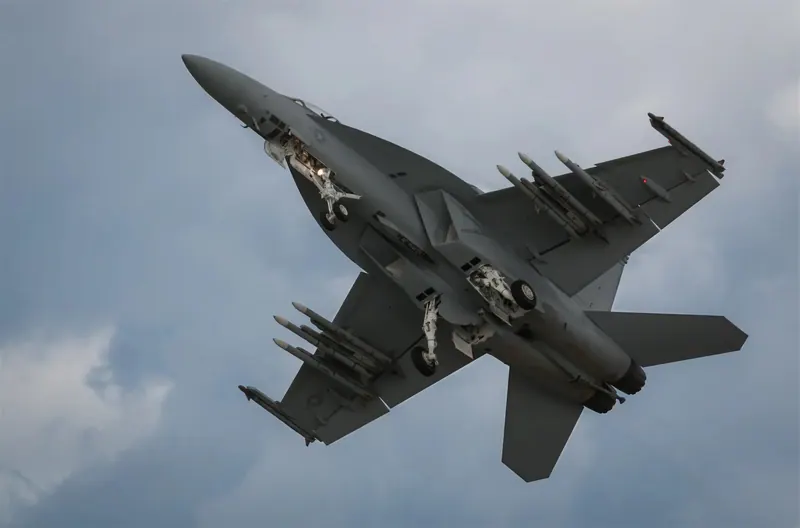
E28.1 Excluding Multi-Axis Autopilots – Fixed Wing
- Licence category
- B2
B2 MAML holders with exclusion E28.1 (Excluding Multi-Axis Autopilots - Fixed Wing) who need it removed.
View units for this course ↓View full course information ↓Who this course suits
Course overview
Who is this course for?
B2 MAML holders with exclusion E28.1 (Excluding Multi-Axis Autopilots - Fixed Wing) who need it removed.
On successful completion
Course outcomes
Upon successful completion of this course, candidates will receive:

- Per DASR requirement, a Statement of Attainment (SoA) listing all Units of Competency successfully completed and required for the outcome, with MTO number displayed;
Your study mode
Delivery & fees
Review the entry requirements, timing and fees for this delivery mode.
Experienced Engineer Path
RPL & gap training · 2+ years’ experience
- This course is designed for working aircraft maintenance engineers
- This delivery mode requires a minimum of two (2) years of aircraft maintenance experience
- Learners must be currently employed in an aircraft maintenance environment working on operating aircraft
- Learners must be able to provide acceptable evidence for the practical tasks specified in each Unit of Competency
- Estimated duration
- 1 month
- Study load
- 8 hours per week
- Tuition
- $2,900Full Fee [Before Credit]
- Assessment & Learning Material
- All Inclusive
Payment Plans Available. Includes $500 non-refundable application fee
Your experience can reduce the fee & time
The figures assume you complete all requirements, with no credit. Most experienced engineers receive some credit, but it is not guaranteed.
Your pace depends mainly on providing evidence, completing knowledge assessments and passing any required exams. Assessment and exam availability also affect timing.
Approved credit usually reduces tuition for Australia-based applicants. Offshore tuition is not reduced.
Course requirements
Units of competency
Open a row for the content, selection notes and prerequisites. Unit links open the national register in a new tab.
2 listed
Unit of competency
MEA293 Remove and install aircraft electronic system components
What you will learn:
Build competence to remove and install aircraft electronic system components under operational maintenance conditions, aligned to approved data and controlled risk management. Practical activities include cockpit voice recorder system components, plus inertial navigation and reference systems, with attention to access, protection, and damage prevention. Knowledge areas include key features of panel and rack mounting systems, rendering system safe for removal, and WHS processes and practices to support faultfinding and defensible serviceability decisions. Competence is demonstrated through safe work practices, correct configuration control, and records that stand up to audit.
- Apply relevant manuals and enterprise procedures to aircraft electronic system components, ensuring correct set-up, isolation, and compliance with local requirements.
- Select tooling and support equipment, then complete practical work on aircraft electronic system components without introducing damage or FOD.
- Assess defects and performance on aircraft electronic system components using appropriate test methods, then confirm correct operation before release.
- Record results, defects, and rectification actions, and communicate status to support certification-ready handover.
MEAAVI0014 Inspect, test and troubleshoot fixed wing autopilot systems and components
What you will learn:
Build competence to inspect, test, and troubleshoot fixed wing autopilot systems and components under operational maintenance conditions, using approved data and safe systems of work. Hands-on work covers multi-axis autopilot system components and testing and troubleshooting on a three-axis fixed wing autopilot system, using the right tools and controlled isolation practices. Theory and application link flight director components and interface, work health and safety practices for fixed wing, and three-axis autopilot system components to real maintenance decisions and troubleshooting logic. Competence is demonstrated through safe work practices, correct configuration control, and records that stand up to audit.
- Apply relevant manuals and enterprise procedures to fixed wing autopilot systems and components, ensuring correct set-up, isolation, and compliance with local requirements.
- Prepare the work area and carry out hands-on tasks on fixed wing autopilot systems and components, using correct tools, test equipment, and contamination control.
- Assess defects and performance on fixed wing autopilot systems and components using appropriate test methods, then confirm correct operation before release.
- Document work performed and test outcomes, and provide a clean technical handover for continuing airworthiness.
Selection restrictions
Take instead of MEA225 and MEA230 if only maintaining 3 axis autopilot system
Prerequisites
MEA246, MEA293
Implied prerequisites
MEA107, MEA154, MEA155, MEA156, MEA157, MEA158, MEA201, MEA296
View MEAAVI0014 on the national register ↗Requirements, assessment & conditions
Full Course Details
Details for Experienced Engineer Path.
Full course title & description
E28.1 Excluding Multi-Axis Autopilots – Fixed Wing / for DASR B2
DASR E28.1 for B2
Gap training and assessment to support removal of the nominated DASR 66 MAML exclusion. Aligned to the DASR 66 syllabus and DASA’s exclusions/inclusions manual.
Important course information
Completion of this course provides evidence toward removal of the applicable MAML exclusion. DASA assesses the application and applies the MAML variation; course completion does not itself amend the licence.
Applications for the issue or variation of a MAML are made to DASA using the applicable DASR Form 19 or Form 19A, together with the required supporting evidence.
DASA does not provide partial removal of a Category A or Category B exclusion. All applicable requirements for the exclusion must be satisfied.
Before you apply
- This course is designed for working aircraft maintenance engineers
- This delivery mode requires a minimum of two (2) years of aircraft maintenance experience
- Learners must be currently employed in an aircraft maintenance environment working on operating aircraft
- Learners must be able to provide acceptable evidence for the practical tasks specified in each Unit of Competency
Entry requirements
Age
- Minimum age 18 years at commencement of course
Education
- All courses except MEA20518 Certificate II in Aircraft Line Maintenance: Australian High School Year 11 completion with a pass in English and maths; or completion of a formal Language literacy and numeracy (LLN) assessment tool at ACSF Level 3.
- Only if applying for MEA20518 Certificate II in Aircraft Line Maintenance (any elective focus): Completion of Year 10 (Queensland or equivalent), including minimum Year 10 Mathematics and English, applies instead of the Year 11 requirement above.
Employment and Evidence
- Candidate must be working in an aircraft maintenance environment on operating aircraft AND
- Candidate must be able to present valid evidence (as specified in the Acceptable Practical Evidence Guide) of completion of practical tasks undertaken by the candidate prior to our assessment of that evidence (see the Unit of Competency table for links to full requirements of each unit of competency >). Once provided by the candidate and authenticated as valid by SAC, the college will use this evidence as part of a portfolio of evidence to build a case for competence via Recognition of Prior Learning (RPL)) and Gap Training.
Experience
- Two years of aircraft maintenance experience OR
- Two years of aircraft maintenance training at a regulator-approved Maintenance training organisation
Computing
- Desktop or Laptop computer with webcam and speaker, and modern web browser, PDF viewer, and standards-compatible office suite software
- Reliable broadband internet connection
- An active email address
- Intermediate computing skills, including knowledge of how to use internet to access information.
Residency
- Students must not be on an Australian 500 class student visa, and subject to its terms.
How we train
How We Undertake Training (RPL & Gap)
Training for students in the RPL and Gap pathway is self-directed online for theory only.
Theory Training
Training for students taking the RPL & Gap training pathway is self-directed online, but supported with engaging learner resources, regular webinars and Q&A sessions, 1:1 tutoring on request, and support from our training team when required.
The following training and resources are provided for each Unit of Competency:
- Audio lecture (available as a podcast feed)^
- Sigma Digital Learner Guide / PDF Learning Materials
- Toolbox 60 webinars (students can attend fortnightly online)
- Live Q&A sessions (students can attend fortnightly online)
- Quarterly check-in
- Tutoring sessions (on request)
Note: Practical training is not offered for this delivery mode. This pathway is designed for engineers with existing experience and supporting aviation industry-standard documentation (e.g. Journal of Industrial Experience, task cards). Students are expected to provide evidence of practical competency, which is assessed via RPL in line with SAC’s Acceptable Practical Evidence Guidelines.
Where practical training is requested, this may be arranged on a fee-for-service basis for groups, either onsite at SAC facilities or offsite at an approved AMO/MRO facility.
^Audiobook rollout in-progress - not all units will include an audiobook at time of enrolment
How we assess
How We Undertake Assessment (RPL & Gap)
Sigma Aerospace College operates a four-stage RPL & Gap assessment process following successful application and onboarding.
Assessment Phase 1 – Gap Analysis
Once the onboarding process is complete and initial documentation has been provided, SAC undertakes an assessment of prior learning, applicable credit transfer, and any identified knowledge gaps.
At this stage, an invoice is issued for tuition fees (the course fee listed on the website, less any approved credit transfer). Once payment is received:
- The customised learning environment is unlocked
- An initial RPL report (as required by CASA) is issued
This invoice covers all tuition fees, training materials, and any applicable CASA exams.
Assessment Phase 2 – Gap Assessment (Theory) and RPL Evidence Collection (Practical)
Once the customised learning environment is unlocked in the learning management system (aXcelerate), students are presented with:
- Knowledge gap assessments for Units of Competency not granted in full during Phase 1 via RPL or credit transfer
- Practical evidence upload assessments for outstanding Units of Competency
Submitted practical evidence is assessed via RPL against Unit of Competency performance evidence requirements.
Assessment Phase 3 – Competency Conversation
Following completion of gap assessments and submission of sufficient practical evidence (as defined in the Acceptable Practical Evidence Guide), students undertake a clustered competency conversation with an instructor.
- Format: one-on-one discussion
- Duration: approximately 30–60 minutes
- Purpose: final verification of competency
Assessment Phase 4 – CASA Exams
For training products with a CASA outcome, the final stage involves preparation for and completion of invigilated CASA examinations. An administrator will contact the student at the conclusion of Phase 3 to arrange suitable exam times.
Note: Students may apply for recognition of prior learning for any existing practical experience at any time, as long as at the time of Sigma's assessment of that evidence as prior learning (i.e. when uploaded to the relevant capture in the LMS) the evidence meets the terms in the acceptable practical evidence guide, is authentic, sufficient, and meets unit requirements.
Fees, duration & payment
Payment Plans Available. Includes $500 non-refundable application fee
Your experience can reduce the fee & time
The figures assume you complete all requirements, with no credit. Most experienced engineers receive some credit, but it is not guaranteed.
Your pace depends mainly on providing evidence, completing knowledge assessments and passing any required exams. Assessment and exam availability also affect timing.
Approved credit usually reduces tuition for Australia-based applicants. Offshore tuition is not reduced.
Fee conditions & refunds
The displayed tuition is the full fee before credit and includes the $500 application payment. Every experienced engineer's case is different. Most experienced engineers receive some credit, but credit is not guaranteed. For Australia-based applicants, approved credit will usually reduce the tuition payable. Offshore applicants do not receive a tuition reduction.
Sigma confirms your Credit Transfer, RPL and gap requirements after reviewing your evidence. Your final enrolment invoice confirms the tuition payable and deducts the $500 application payment already made.
Additional charges may apply only where expressly listed in Sigma's current Fees and Refunds Procedure.
Duration conditions
- The displayed duration is a guide for completing all requirements in this RPL and gap pathway without credit. It is not a fixed course length or a promised completion date.
- Most experienced engineers receive some credit, but credit is not guaranteed. Approved credit reduces the requirements you still need to complete.
- Your pace depends mainly on how promptly you supply valid practical evidence, complete knowledge assessments and pass any required CASA examinations. Access to tasks, assessment turnaround and examination availability also affect completion.
- Sigma confirms your individual training and assessment plan after reviewing your evidence. You may finish sooner or take longer than the guide.
Delivery pathway & conditions
This pathway is designed for experienced, self-motivated aircraft maintenance engineers.
Knowledge is assessed through an individualised combination of Recognition of Prior Learning (RPL) and targeted knowledge gap assessments, and Practical competency (performance evidence) is assessed via RPL using acceptable practical evidence, as approved and authorised by CASA, and documented in SAC's approved Maintenance Training Organisation Exposition (MTOE).
Equivalence of Standard
The RPL and Gap Training pathway does not reduce the competency standard required for the award of the qualification. All learners, regardless of delivery mode, must meet the full requirements of each unit of competency, including performance evidence, knowledge evidence and assessment conditions.
No unit of competency is granted solely on the basis of employment history or documentation without structured assessment and verification.
RPL & Gap Assessment – Student Acknowledgement and Delivery Conditions
I acknowledge and understand that the RPL & Gap assessment delivery mode is a self-directed training and assessment pathway intended for experienced aircraft maintenance engineers only.
I understand and agree that:
- This delivery mode does not include structured practical training or supervised practical assessment;
- Practical competency is assessed through Recognition of Prior Learning (RPL), as approved by CASA and documented in Sigma's MTOE and as such,
- No practical training is included in this course, as it is designed for experienced engineers with significant experience in industry, and I am expected to provide evidence of competency specified in the units of competency for this course, and I have read performance (practical) evidence requirements included in the links to each unit of competency on this course as detailed on the course page and linked via unit code to the official register on training.gov.au;
- I understand that for this reason I must also be employed in active aircraft maintenance environment working on live aircraft, and that it is my responsibility to provide all required evidence of practical competency per the guide. If you are not currently working in an aircraft in a live aircraft maintenance environment, but after having read the practical evidence guide and the practical requirements of all the units of competency for your given stream you believe you have sufficient evidence for Sigma to recognise your experience, you may proceed at your own risk (understanding no refunds are provided in this case).
- I am responsible for providing valid, sufficient, authentic, and current evidence of practical competence;
- All practical evidence must be submitted online in accordance with the Acceptable Practical Evidence Guide, as approved by CASA in Sigma's MTOE;
- Evidence may include, but is not limited to, logbooks, task records, workplace documentation, and third-party verification;
I confirm that I have read and understood the performance evidence requirements for each Unit of Competency, as outlined in the Units of Study table for this course, and understand that failure to provide suitable evidence may result in:
- Additional gap training or assessment requirements, and/or
- Non-award of competency for one or more Units of Competency
Sigma take academic integrity extremely seriously. I confirm that I understand the academic integrity requirements of this course as specified on the policy page, and that cheating or use of any plagiarism tools / AI tools in completion of, or fabricating evidence for, assessment will result in a cancellation of enrolment and formal report to relevant authorities (including CASA) - this includes evidence of cheating or misconduct in invigilated CASA exams, which will result in a formal report to CASA of both yourself, AND your nominated invigilator, AND nominated facility AND may include a formal ban on enrolment or examination within the facility.
Also ensure you have read and understand these documents before applying:
Sigma BoothBot · AI training assistant
Live chat. Get answers now.
Ask about this course or your training pathway.
Experienced Engineer Path