
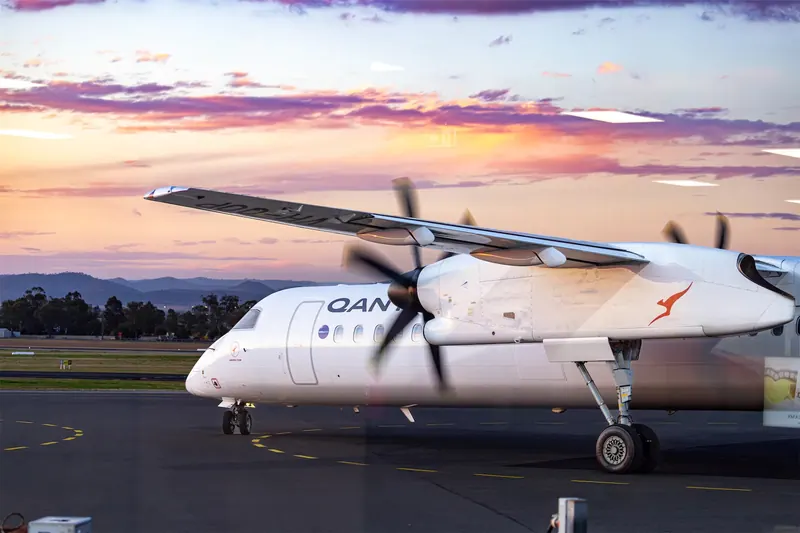
Certificate IV in Aeroskills (Mechanical)
- Discipline
- Mechanical
- Stream
- Component Maintenance
- Work setting
- Workshop (Gas Turbine Engine)
Mechanical maintainers seeking a Certificate IV outcome to formalise trade-level skills in aircraft mechanical maintenance.
View units for this course ↓View full course information ↓Who this course suits
Course overview
Who is this course for?
Mechanical maintainers seeking a Certificate IV outcome to formalise trade-level skills in aircraft mechanical maintenance.
Review the course scope, eligibility and certification conditions before you apply. Read important course information
On successful completion
Course outcomes
Upon successful completion of this course, candidates will receive:


- AQF testamur for MEA40718 Certificate IV in Aeroskills (Mechanical)
- Record of Results (RoR)
Your study mode
Delivery & fees
Review the entry requirements, timing and fees for this delivery mode.
Experienced Engineer Path
RPL & gap training · 2+ years’ experience
- This course is designed for working aircraft maintenance engineers
- This delivery mode requires a minimum of two (2) years of aircraft maintenance experience
- Learners must be currently employed in an aircraft maintenance environment working on operating aircraft
- Learners must be able to provide acceptable evidence for the practical tasks specified in each Unit of Competency
- Estimated duration
- 3 months
- Tuition
- $5,200Full Fee [Before Credit]
- Assessment & Learning Material
- All Inclusive
Payment Plans Available. Includes $500 non-refundable application fee
Your experience can reduce the fee & time
The figures assume you complete all requirements, with no credit. Most experienced engineers receive some credit, but it is not guaranteed.
Your pace depends mainly on providing evidence, completing knowledge assessments and passing any required exams. Assessment and exam availability also affect timing.
Approved credit usually reduces tuition for Australia-based applicants. Offshore tuition is not reduced.
Course requirements
Units of competency
Open a row for the content, selection notes and prerequisites. Unit links open the national register in a new tab.
14 listed
Unit of competency
MEA107 Interpret and use aviation maintenance industry manuals and specifications
What you will learn:
Build competence to locate, interpret and use maintenance manuals and specifications in line and base maintenance settings, meeting enterprise procedures and regulatory expectations for safe outcomes. Hands-on work covers amend industry manuals to reflect current/approved amendment status in line and the accessed information from drawings and diagrams in aircraft maintenance, using the right tools and controlled isolation practices. Theory and application link statutory regulations and/or organisational procedures relating to amending, illustrated parts catalogues, and techniques for obtaining and applying data contained to real maintenance decisions and troubleshooting logic. Focus remains on removing ambiguity—cross‑checking sources, escalating uncertainty, and documenting the data trail.
- Use document control practices to ensure the correct references are used before work starts.
- Extract procedural steps, limits and tolerances to build a correct work plan and inspection/test approach.
- Identify when engineering support or higher authority is needed due to unclear, conflicting or missing data.
- Document the references used and assumptions made, and communicate constraints and requirements to the team.
MEA118 Conduct self in the aviation maintenance environment
What you will learn:
Develop the capability to apply professional self‑management in maintenance workplaces across hangar, workshop, and flight-line tasks, using approved data and safe systems of work. Key tasks span interact effectively with others in the performance of maintenance and provide guidance to other team members, with disciplined sequencing and verification of each step. Knowledge areas include key components of organisational policies, effect of human factors relating to fatigue, and problem solving and change management principles to support faultfinding and defensible serviceability decisions. Emphasis is on professional discipline—clear communication, reliable handovers, and decisions that protect safety and quality.
- Manage priorities and workload to maintain quality under time pressure and changing operational demands.
- Use disciplined work habits (checklists, self‑checks, interruption control) to prevent slips and lapses.
- Support a reporting culture by raising hazards and near misses with clear, factual information.
- Record work status, decisions and follow‑up actions so others can pick up tasks safely and efficiently.
MEA154 Apply work health and safety practices in aviation maintenance
What you will learn:
Build competence to identify hazards and implement effective controls across hangar, workshop, and flight-line tasks, meeting enterprise procedures and regulatory expectations for safe outcomes. Key tasks span correct interpretation of enterprise and regulatory emergency procedures and correctly interpreting WHS regulations, with disciplined sequencing and verification of each step. Theory and application link methods of risk assessment and control, correct selection and use of workplace emergency, and applicable sources of WHS requirements and procedures to real maintenance decisions and troubleshooting logic. Emphasis is on preventing harm and protecting the aircraft through disciplined risk control and clear reporting of hazards and incidents.
- Apply WHS legislation, organisational policies and site rules to the task and work area.
- Apply isolation and lock‑out/tag‑out practices where required, and verify safe conditions prior to work.
- Respond to incidents and emergencies through reporting, initial actions, and follow‑up investigations.
- Use reporting systems to support learning and prevention, not just compliance.
MEA155 Plan and organise aviation maintenance work activities
What you will learn:
Build competence to schedule and control maintenance tasks and resources in line and base maintenance settings, aligned to approved data and controlled risk management. Practical activities include apply human factors in planning maintenance activity, plus ensure safe and appropriate sequencing of tasks, with attention to access, protection, and damage prevention. Knowledge areas include key industry standards and organisational requirements and procedures, relationship between broader planning and organising requirements, and nature and impact of human factors affecting the to support faultfinding and defensible serviceability decisions. Focus remains on controlling interfaces and non‑routine work so airworthiness risks are identified early and managed.
- Interpret work packages and approved data, then translate requirements into a practical job plan.
- Manage tooling, parts and facility availability to avoid schedule-driven errors.
- Review progress against schedule and quality targets, and adjust plans based on emerging information.
- Maintain traceable planning and execution records, and provide clear task status and handover information.
Prerequisites
MEA154
View MEA155 on the national register ↗MEA156 Apply quality standards during aviation maintenance activities
What you will learn:
Develop the capability to apply quality standards and assurance processes within an aircraft maintenance organisation, with disciplined control of hazards, tooling, and configuration. Hands-on work covers differentiate the elements that constitute the quality system and and ISO 9000 compliant documentation and specifications relating to quality, using the right tools and controlled isolation practices. Knowledge areas include relationship between the quality system and work health, reporting maintenance-related incidents and errors, and typical quality systems applied in aviation maintenance contexts to support faultfinding and defensible serviceability decisions. Focus remains on preventing defects from escaping: right first time, evidence‑based acceptance, and continuous improvement.
- Identify quality requirements and acceptance criteria for the task, and confirm the correct reference standards apply.
- Collect objective evidence (measurements, inspections, test results) to demonstrate conformity to requirements.
- Identify non‑conformances and apply corrective actions or escalation pathways as required.
- Support audits and continuous improvement activities with accurate data and reporting.
Prerequisites
MEA154, MEA107
View MEA156 on the national register ↗MEA157 Complete aviation maintenance industry documentation
What you will learn:
Build competence to produce and control aviation maintenance documentation and records across hangar, workshop, and flight-line tasks, with disciplined control of hazards, tooling, and configuration. Practical activities include organisational and regulatory procedures, plus demonstrate required levels of literacy and numeracy, with attention to access, protection, and damage prevention. Knowledge areas include quality manuals, organisational and regulatory procedures required to complete, and Defence regulations and instructions applicable to the maintenance to support faultfinding and defensible serviceability decisions. Focus remains on traceability and configuration control so records reflect what was done, by whom, and to which standard.
- Apply controlled document practices (version control, amendments, approvals) across maintenance records and releases.
- Structure entries so a third party can reconstruct what was done, when, and to which standard.
- Verify records are complete and consistent with work performed and acceptance criteria before sign‑off or handover.
- Communicate documentation status and constraints during shift handover or task close‑out.
MEA158 Perform basic hand skills, standard trade practices and fundamentals in aviation maintenance
What you will learn:
Develop the capability to perform foundational workshop and on‑aircraft hand skills in line and base maintenance settings, aligned to approved data and controlled risk management. Practical activities include install aircraft hardware using tightening, plus use and store general and purpose-specific hand tools found, with attention to access, protection, and damage prevention. Theory and application link laying out simple items for manufacture using basic, work health and safety requirements and standard workshop, and types of standard aircraft hardware and methods to real maintenance decisions and troubleshooting logic. Focus remains on safe tool use, accurate measurement, and clean work that does not introduce defects or contamination.
- Prepare workpieces and surfaces for hand operations using correct PPE, guarding and safe handling.
- Carry out basic workshop operations (marking out, drilling, deburring, fastening, torqueing) without introducing damage.
- Identify rework requirements early and correct defects without creating secondary damage.
- Control tools and loose articles to prevent FOD, and maintain a clean work area.
MEA201 Remove and install miscellaneous aircraft electrical hardware/components
What you will learn:
Strengthen the ability to remove and install miscellaneous aircraft electrical hardware/components under operational maintenance conditions, aligned to approved data and controlled risk management. Practical activities include inspection of electrical looms and harness pre and post-removal, plus the correct interpretation of aircraft wire markings, with attention to access, protection, and damage prevention. Knowledge areas include electrical fundamentals, application of relevant WHS practices, and use of approved maintenance documentation and aircraft to support faultfinding and defensible serviceability decisions. Work is expected to align with approved data and organisational procedures, with clear reporting of defects and rectification actions.
- Interpret procedures and specifications for miscellaneous aircraft electrical hardware/components; confirm applicability, revision status, and any required precautions before work starts.
- Select tooling and support equipment, then complete practical work on miscellaneous aircraft electrical hardware/components without introducing damage or FOD.
- Assess defects and performance on miscellaneous aircraft electrical hardware/components using appropriate test methods, then confirm correct operation before release.
- Produce clear maintenance records and reports, including non-routine findings and any follow-up actions required.
Prerequisites
MEA156, MEA155, MEA154, MEA158, MEA157, MEA107
View MEA201 on the national register ↗MEA296 Use electrical test equipment in aviation maintenance activities
What you will learn:
Strengthen the ability to use electrical test equipment in aviation maintenance activities in line and base maintenance settings, using approved data and safe systems of work. Key tasks span connect test equipment to components or circuits and determine polarity and applicable connection points for measurement or testing, with disciplined sequencing and verification of each step. Theory and application link bonding, phase angle, and procedures for fitting leads to real maintenance decisions and troubleshooting logic. Work is expected to align with approved data and organisational procedures, with clear reporting of defects and rectification actions.
- Interpret procedures and specifications for electrical test equipment in aviation maintenance activities; confirm applicability, revision status, and any required precautions before work starts.
- Execute maintenance actions on electrical test equipment in aviation maintenance activities with disciplined sequencing, correct technique, and control of hazards.
- Inspect and function-test electrical test equipment in aviation maintenance activities; troubleshoot faults using bonding, phase angle and confirm post-maintenance serviceability against acceptance criteria.
- Record results, defects, and rectification actions, and communicate status to support certification-ready handover.
Prerequisites
MEA156, MEA155, MEA154, MEA158, MEA157, MEA107
View MEA296 on the national register ↗MEAMEC0063 Repair and overhaul gas turbine engine air inlet and compressor components and modules
What you will learn:
Gain practical skills to repair and overhaul gas turbine engine air inlet and compressor components and modules in line and base maintenance settings, with disciplined control of hazards, tooling, and configuration. Key tasks span during the above work and replace seals and backing rings, with disciplined sequencing and verification of each step. Technical coverage spans repair and overhaul procedures and processes, how to obtain relevant material safety data sheets, and use of applicable items of personal protective, with emphasis on how these factors drive maintenance outcomes. Competence is demonstrated through safe work practices, correct configuration control, and records that stand up to audit.
- Apply relevant manuals and enterprise procedures to and overhaul gas turbine engine air inlet and compressor components and modules, ensuring correct set-up, isolation,.
- Prepare the work area and carry out hands-on tasks on and overhaul gas turbine engine air inlet and compressor components and modules, using correct.
- Verify outcomes on and overhaul gas turbine engine air inlet and compressor components and modules through inspection, test, and logic-based faultfinding, including checks after.
- Record results, defects, and rectification actions, and communicate status to support certification-ready handover.
Prerequisites
MEA156, MEA155, MEA154, MEA158, MEA157, MEA107
View MEAMEC0063 on the national register ↗MEAMEC0064 Repair and overhaul gas turbine engine combustion section components and modules
What you will learn:
Learn to repair and overhaul gas turbine engine combustion section components and modules within an aircraft maintenance organisation, aligned to approved data and controlled risk management. Practical activities include during the above work, plus remove corrosion within maintenance manual limits, with attention to access, protection, and damage prevention. Technical coverage spans repair and overhaul procedures and processes, fault diagnosis techniques for gas turbine engine combustion, and gas turbine engine combustion section and component operation, with emphasis on how these factors drive maintenance outcomes. Work is expected to align with approved data and organisational procedures, with clear reporting of defects and rectification actions.
- Use approved maintenance data (manuals, drawings, standards) for and overhaul gas turbine engine combustion section components and modules, and confirm configuration, limits, and safety.
- Execute maintenance actions on and overhaul gas turbine engine combustion section components and modules with disciplined sequencing, correct technique, and control of hazards.
- Inspect and function-test and overhaul gas turbine engine combustion section components and modules; troubleshoot faults using repair and overhaul procedures and processes, fault diagnosis.
- Produce clear maintenance records and reports, including non-routine findings and any follow-up actions required.
Prerequisites
MEA156, MEA155, MEA154, MEA158, MEA157, MEA107
View MEAMEC0064 on the national register ↗MEAMEC0065 Repair and overhaul gas turbine, engine turbine and exhaust section components
What you will learn:
Gain practical skills to repair and overhaul gas turbine, engine turbine and exhaust section components under operational maintenance conditions, with disciplined control of hazards, tooling, and configuration. Hands-on work covers afterburner system where it is part of the engine change and jet pipe that is part of the engine change unit, using the right tools and controlled isolation practices. Knowledge areas include work health and safety procedures, how to obtain relevant material safety data sheets, and repair and overhaul procedures and processes to support faultfinding and defensible serviceability decisions. Outcomes must be repeatable: correct technical results, clean handovers, and documentation suitable for certification and continuing airworthiness.
- Apply relevant manuals and enterprise procedures to and overhaul gas turbine, engine turbine and exhaust section components, ensuring correct set-up, isolation, and compliance.
- Prepare the work area and carry out hands-on tasks on and overhaul gas turbine, engine turbine and exhaust section components, using correct tools, test.
- Verify outcomes on and overhaul gas turbine, engine turbine and exhaust section components through inspection, test, and logic-based faultfinding, including checks after rectification.
- Record results, defects, and rectification actions, and communicate status to support certification-ready handover.
Prerequisites
MEA156, MEA155, MEA154, MEA158, MEA157, MEA107
View MEAMEC0065 on the national register ↗MEAMEC0066 Repair and overhaul gas turbine engine ancillary section components
What you will learn:
Learn to repair and overhaul gas turbine engine ancillary section components in line and base maintenance settings, with disciplined control of hazards, tooling, and configuration. Key tasks span during the above work and finish or re-finish metal surfaces through processes, with disciplined sequencing and verification of each step. Technical coverage spans use of applicable items of personal protective, work health and safety procedures for gas turbine, and fault diagnosis techniques for gas turbine engine work, with emphasis on how these factors drive maintenance outcomes. Outcomes must be repeatable: correct technical results, clean handovers, and documentation suitable for certification and continuing airworthiness.
- Use approved maintenance data (manuals, drawings, standards) for and overhaul gas turbine engine ancillary section components, and confirm configuration, limits, and safety controls.
- Execute maintenance actions on and overhaul gas turbine engine ancillary section components with disciplined sequencing, correct technique, and control of hazards.
- Verify outcomes on and overhaul gas turbine engine ancillary section components through inspection, test, and logic-based faultfinding, including checks after rectification.
- Record results, defects, and rectification actions, and communicate status to support certification-ready handover.
Prerequisites
MEA156, MEA155, MEA154, MEA158, MEA157, MEA107
View MEAMEC0066 on the national register ↗MSMENV272 Participate in environmentally sustainable work practices
What you will learn:
Learn to participate in environmentally sustainable work practices across hangar, workshop, and flight-line tasks, with disciplined control of hazards, tooling, and configuration. Practical activities include participate in environmentally sustainable work practices, plus followed environmental policies and identified potential breaches of environmental regulations, with attention to access, protection, and damage prevention. Knowledge areas include environmental and resource efficiency policies and procedures, environmental sustainability issues relevant to organisation, and environmental issues to support faultfinding and defensible serviceability decisions. Outcomes must be repeatable: correct technical results, clean handovers, and documentation suitable for certification and continuing airworthiness.
- Use approved maintenance data (manuals, drawings, standards) for in environmentally sustainable work practices, and confirm configuration, limits, and safety controls.
- Prepare the work area and carry out hands-on tasks on in environmentally sustainable work practices, using correct tools, test equipment, and contamination control.
- Verify outcomes on in environmentally sustainable work practices through inspection, test, and logic-based faultfinding, including checks after rectification.
- Document work performed and test outcomes, and provide a clean technical handover for continuing airworthiness.
Requirements, assessment & conditions
Full Course Details
Details for Experienced Engineer Path.
Full course title & description
Certificate IV in Aeroskills (Mechanical) / Component Maintenance Workshop (Gas Turbine Engine) Stream
MEA40718 / Mechnical - Component Maintenance (Gas Turbine)
Trade-level aeroskills training and assessment in the selected stream, focusing on maintenance practices, component removal/installation, troubleshooting and compliance documentation. Aligned to the Aeroskills training package qualification requirements.
Important course information
Important: Are you ultimately looking to progress to a CASA licence outcome, rather than just a Certificate IV?
Sigma offers structured licence courses that are set up and packaged with the requirements needed to support a CASA licence application, including relevant Units of Competency from the MEA Aeroskills Training Package, CASA Part 66 module exams, Sigma's CASA Form 465 training-outcome notification, and guidance for the applicant's CASA Form 540 application. Additionally, we will confer a formal Certificate IV and Diploma qualification for your selected stream as you progress. You can explore these here >
Before you apply
- This course is designed for working aircraft maintenance engineers
- This delivery mode requires a minimum of two (2) years of aircraft maintenance experience
- Learners must be currently employed in an aircraft maintenance environment working on operating aircraft
- Learners must be able to provide acceptable evidence for the practical tasks specified in each Unit of Competency
Entry requirements
Age
- Minimum age 18 years at commencement of course
Education
- All courses except MEA20518 Certificate II in Aircraft Line Maintenance: Australian High School Year 11 completion with a pass in English and maths; or completion of a formal Language literacy and numeracy (LLN) assessment tool at ACSF Level 3.
- Only if applying for MEA20518 Certificate II in Aircraft Line Maintenance (any elective focus): Completion of Year 10 (Queensland or equivalent), including minimum Year 10 Mathematics and English, applies instead of the Year 11 requirement above.
Employment and Evidence
- Candidate must be working in an aircraft maintenance environment on operating aircraft AND
- Candidate must be able to present valid evidence (as specified in the Acceptable Practical Evidence Guide) of completion of practical tasks undertaken by the candidate prior to our assessment of that evidence (see the Unit of Competency table for links to full requirements of each unit of competency >). Once provided by the candidate and authenticated as valid by SAC, the college will use this evidence as part of a portfolio of evidence to build a case for competence via Recognition of Prior Learning (RPL)) and Gap Training.
Experience
- Two years of aircraft maintenance experience OR
- Two years of aircraft maintenance training at a regulator-approved Maintenance training organisation
Computing
- Desktop or Laptop computer with webcam and speaker, and modern web browser, PDF viewer, and standards-compatible office suite software
- Reliable broadband internet connection
- An active email address
- Intermediate computing skills, including knowledge of how to use internet to access information.
Residency
- Students must not be on an Australian 500 class student visa, and subject to its terms.
How we train
How We Undertake Training (RPL & Gap)
Training for students in the RPL and Gap pathway is self-directed online for theory only.
Theory Training
Training for students taking the RPL & Gap training pathway is self-directed online, but supported with engaging learner resources, regular webinars and Q&A sessions, 1:1 tutoring on request, and support from our training team when required.
The following training and resources are provided for each Unit of Competency:
- Audio lecture (available as a podcast feed)^
- Sigma Digital Learner Guide / PDF Learning Materials
- Toolbox 60 webinars (students can attend fortnightly online)
- Live Q&A sessions (students can attend fortnightly online)
- Quarterly check-in
- Tutoring sessions (on request)
Note: Practical training is not offered for this delivery mode. This pathway is designed for engineers with existing experience and supporting aviation industry-standard documentation (e.g. Journal of Industrial Experience, task cards). Students are expected to provide evidence of practical competency, which is assessed via RPL in line with SAC’s Acceptable Practical Evidence Guidelines.
Where practical training is requested, this may be arranged on a fee-for-service basis for groups, either onsite at SAC facilities or offsite at an approved AMO/MRO facility.
^Audiobook rollout in-progress - not all units will include an audiobook at time of enrolment
How we assess
How We Undertake Assessment (RPL & Gap)
Sigma Aerospace College operates a four-stage RPL & Gap assessment process following successful application and onboarding.
Assessment Phase 1 – Gap Analysis
Once the onboarding process is complete and initial documentation has been provided, SAC undertakes an assessment of prior learning, applicable credit transfer, and any identified knowledge gaps.
At this stage, an invoice is issued for tuition fees (the course fee listed on the website, less any approved credit transfer). Once payment is received:
- The customised learning environment is unlocked
- An initial RPL report (as required by CASA) is issued
This invoice covers all tuition fees, training materials, and any applicable CASA exams.
Assessment Phase 2 – Gap Assessment (Theory) and RPL Evidence Collection (Practical)
Once the customised learning environment is unlocked in the learning management system (aXcelerate), students are presented with:
- Knowledge gap assessments for Units of Competency not granted in full during Phase 1 via RPL or credit transfer
- Practical evidence upload assessments for outstanding Units of Competency
Submitted practical evidence is assessed via RPL against Unit of Competency performance evidence requirements.
Assessment Phase 3 – Competency Conversation
Following completion of gap assessments and submission of sufficient practical evidence (as defined in the Acceptable Practical Evidence Guide), students undertake a clustered competency conversation with an instructor.
- Format: one-on-one discussion
- Duration: approximately 30–60 minutes
- Purpose: final verification of competency
Assessment Phase 4 – CASA Exams
For training products with a CASA outcome, the final stage involves preparation for and completion of invigilated CASA examinations. An administrator will contact the student at the conclusion of Phase 3 to arrange suitable exam times.
Note: Students may apply for recognition of prior learning for any existing practical experience at any time, as long as at the time of Sigma's assessment of that evidence as prior learning (i.e. when uploaded to the relevant capture in the LMS) the evidence meets the terms in the acceptable practical evidence guide, is authentic, sufficient, and meets unit requirements.
Fees, duration & payment
Payment Plans Available. Includes $500 non-refundable application fee
Your experience can reduce the fee & time
The figures assume you complete all requirements, with no credit. Most experienced engineers receive some credit, but it is not guaranteed.
Your pace depends mainly on providing evidence, completing knowledge assessments and passing any required exams. Assessment and exam availability also affect timing.
Approved credit usually reduces tuition for Australia-based applicants. Offshore tuition is not reduced.
Fee conditions & refunds
The displayed tuition is the full fee before credit and includes the $500 application payment. Every experienced engineer's case is different. Most experienced engineers receive some credit, but credit is not guaranteed. For Australia-based applicants, approved credit will usually reduce the tuition payable. Offshore applicants do not receive a tuition reduction.
Sigma confirms your Credit Transfer, RPL and gap requirements after reviewing your evidence. Your final enrolment invoice confirms the tuition payable and deducts the $500 application payment already made.
Additional charges may apply only where expressly listed in Sigma's current Fees and Refunds Procedure.
Duration conditions
- The displayed duration is a guide for completing all requirements in this RPL and gap pathway without credit. It is not a fixed course length or a promised completion date.
- Most experienced engineers receive some credit, but credit is not guaranteed. Approved credit reduces the requirements you still need to complete.
- Your pace depends mainly on how promptly you supply valid practical evidence, complete knowledge assessments and pass any required CASA examinations. Access to tasks, assessment turnaround and examination availability also affect completion.
- Sigma confirms your individual training and assessment plan after reviewing your evidence. You may finish sooner or take longer than the guide.
Delivery pathway & conditions
This pathway is designed for experienced, self-motivated aircraft maintenance engineers.
Knowledge is assessed through an individualised combination of Recognition of Prior Learning (RPL) and targeted knowledge gap assessments, and Practical competency (performance evidence) is assessed via RPL using acceptable practical evidence, as approved and authorised by CASA, and documented in SAC's approved Maintenance Training Organisation Exposition (MTOE).
Equivalence of Standard
The RPL and Gap Training pathway does not reduce the competency standard required for the award of the qualification. All learners, regardless of delivery mode, must meet the full requirements of each unit of competency, including performance evidence, knowledge evidence and assessment conditions.
No unit of competency is granted solely on the basis of employment history or documentation without structured assessment and verification.
RPL & Gap Assessment – Student Acknowledgement and Delivery Conditions
I acknowledge and understand that the RPL & Gap assessment delivery mode is a self-directed training and assessment pathway intended for experienced aircraft maintenance engineers only.
I understand and agree that:
- This delivery mode does not include structured practical training or supervised practical assessment;
- Practical competency is assessed through Recognition of Prior Learning (RPL), as approved by CASA and documented in Sigma's MTOE and as such,
- No practical training is included in this course, as it is designed for experienced engineers with significant experience in industry, and I am expected to provide evidence of competency specified in the units of competency for this course, and I have read performance (practical) evidence requirements included in the links to each unit of competency on this course as detailed on the course page and linked via unit code to the official register on training.gov.au;
- I understand that for this reason I must also be employed in active aircraft maintenance environment working on live aircraft, and that it is my responsibility to provide all required evidence of practical competency per the guide. If you are not currently working in an aircraft in a live aircraft maintenance environment, but after having read the practical evidence guide and the practical requirements of all the units of competency for your given stream you believe you have sufficient evidence for Sigma to recognise your experience, you may proceed at your own risk (understanding no refunds are provided in this case).
- I am responsible for providing valid, sufficient, authentic, and current evidence of practical competence;
- All practical evidence must be submitted online in accordance with the Acceptable Practical Evidence Guide, as approved by CASA in Sigma's MTOE;
- Evidence may include, but is not limited to, logbooks, task records, workplace documentation, and third-party verification;
I confirm that I have read and understood the performance evidence requirements for each Unit of Competency, as outlined in the Units of Study table for this course, and understand that failure to provide suitable evidence may result in:
- Additional gap training or assessment requirements, and/or
- Non-award of competency for one or more Units of Competency
Sigma take academic integrity extremely seriously. I confirm that I understand the academic integrity requirements of this course as specified on the policy page, and that cheating or use of any plagiarism tools / AI tools in completion of, or fabricating evidence for, assessment will result in a cancellation of enrolment and formal report to relevant authorities (including CASA) - this includes evidence of cheating or misconduct in invigilated CASA exams, which will result in a formal report to CASA of both yourself, AND your nominated invigilator, AND nominated facility AND may include a formal ban on enrolment or examination within the facility.
Also ensure you have read and understand these documents before applying:
Sigma BoothBot · AI training assistant
Live chat. Get answers now.
Ask about this course or your training pathway.
Experienced Engineer Path