The best people in
aircraft maintenance

Aeroskills Industry Readiness

AIR pre-apprentice program.

A five-week introduction to aircraft maintenance. Learn the foundations, try practical tasks and show employers how you approach the work.

5 weeks

Intensive, face-to-face

Up to 15

People in each class

Australia-wide

With funding & host facilities

AIR students learning beside a McDermott Aviation helicopter

A practical start

Find out if aircraft maintenance is for you.

AIR is Sigma’s Aeroskills Industry Readiness program. It introduces aircraft maintenance work to people seeking a trade assistant role or AME apprenticeship.

You work through foundation theory, guided practical tasks and assessments with trainers. Employers get to see how you follow instructions, handle tools, respond to feedback and work with others over five weeks.

It is a pre-employment, non-accredited program. AIR builds a starting point for further training; it does not award a trade qualification or an aircraft maintenance licence.

The program in action

A look inside AIR.

See the people, the practical work and the aircraft maintenance setting behind the program.

3 min 15 sec Watch on Vimeo ↗

Sigma Aerospace College

Five weeks. Plenty to get your hands on.

Start with safe habits, work through maintenance practices, then put the learning into practical projects. Choose a week to see the topics and daily outline.

Week 1 / 5

Think like a maintainer

Start with the habits that matter around aircraft: safety, tool discipline, clear communication and working within your role.

MondayWelcome to the maintenance environment

Induction, personal protective equipment, tool control and a LAME’s perspective on why small lapses matter.

TuesdaySafety around aircraft

Foreign object debris, workplace health and safety, hangar and flightline hazards, and emergency awareness.

WednesdayPeople, pressure and maintenance

Human factors, fatigue, time pressure, preventative and corrective maintenance, and maintaining standards when conditions change.

ThursdayWorking under supervision

Teamwork, reporting defects and hazards, approved maintenance data, paperwork and the Maintenance Organisation Exposition (MOE).

FridayBehind the hangar doors

Industry visits introduce different maintenance environments. The supplied program includes defence, airline heavy maintenance and charter operations. Visits depend on host access.

Week 2 / 5

Get familiar with the work

Connect classroom learning with the everyday tasks, hardware and procedures used in an aircraft maintenance workplace.

MondayGeneral maintenance practices

Lubrication, ground handling, aircraft washing and visual inspections, including safe use of equipment and materials.

TuesdayComponents and locking methods

Filters, chip detectors and magnetic plugs, aircraft lockwiring and O-rings.

WednesdayHardware and aircraft wiring

Fasteners, washers, nuts, safety clips and split pins, plus wiring support, separation and EWIS awareness.

ThursdayTake five. Check progress.

A structured progress review, instructor questions, help with gaps, emergency response procedures and revision.

FridayFrom concept to cockpit

An introduction to aerospace design and certification, with an industry session where available.

Week 3 / 5

See the different trades

Broaden the view: servicing, structures, composites and paint preparation all demand care, safe methods and the right instructions.

MondayServicing and system safety

Refuelling precautions, oxygen system hazards and handling, and nitrogen systems including aircraft tyre inflation.

TuesdayAircraft structures

Sheet metal and composite structures, corrosion identification and control, and safe handling of materials.

WednesdayComposites and painting

A composite damage exercise, including tap testing and reporting, followed by painting hazards and preparation principles.

ThursdayPreparation makes the finish

Paint preparation, masking and sealing, material compatibility and protecting aircraft surfaces, followed by revision.

FridayResponsibility in aviation

Company people procedures and discussion of responsibility in maintenance. Regulator or investigation-agency sessions are arranged where available.

Week 4 / 5

Make it. Check it. Improve it.

Move into sustained workshop projects. Accuracy, safe working, time management and tool control matter throughout the task.

MondayPlan the practical work

Company maintenance programs and job packs, practical assessment expectations, tools, materials and end-of-session tool clearance.

TuesdayV-block project · start

Begin the V-block assignment alongside general aircraft trade fundamentals in the learning system.

WednesdayV-block project · develop

Continue the project, with general and avionics trade fundamentals, revision and trainer support.

ThursdayV-block project · complete

Continue and finish the planned task, with avionics fundamentals and time for remedial work.

FridaySteel block and lockwire jig · start

Begin the next practical assignment alongside avionics and mechanical fundamentals.

Week 5 / 5

Bring the skills together

Complete the practical projects, consolidate the theory and review what you have learned before discussing your next step.

MondaySteel block and lockwire jig · develop

Continue the assignment with mechanical and structures fundamentals and trainer feedback.

TuesdaySteel block and lockwire jig · complete

Complete the planned task and continue structures fundamentals, revision and any remedial work.

WednesdayPipe and panel projects

Rigid pipe manufacture using the Bell 214 example in this program, followed by an instrument panel manufacturing task.

ThursdayFinish, review and pack down

Complete the panel, outstanding LMS work and assessments, review the course and practise proper housekeeping.

FridayCourse completion

Course feedback, completion documentation and certificate presentation, with a closing session to recognise the work completed.

An example five-week curriculum. Topics and practical work are adapted to the host facilities and aircraft available. Visits, speakers and the daily sequence are confirmed for each intake. All practical maintenance activity is subject to appropriate supervision and site procedures.

Who AIR is for

A first step for people.
A closer look for employers.

For individuals

Curious about aircraft maintenance?

AIR suits school leavers and other people entering the industry who want to try practical work before pursuing a trade assistant role or apprenticeship. Bring curiosity, care and a willingness to learn.

For employers & industry

See more than an interview.

A class gives your team time to observe practical aptitude, safe behaviour, attention to detail and response to feedback. Use that evidence when considering candidates for supervised entry roles.

What you bring matters.

This is an intensive five-week commitment. Expect face-to-face attendance, daily handbook notes and questions, practical assignments and evening theory or outstanding LMS work. Ask your trainer for help early. Site induction, PPE and host entry requirements are confirmed for each intake.

Industry + government + Sigma

Your region. Your next intake.

AIR can run anywhere in Australia. Each class has up to 15 people. Delivery needs funding and suitable facilities, brought together with industry, government or industry bodies.

An operator can host a class, several local employers can work together, or an industry body can coordinate a regional intake. Sigma scopes the delivery with you: the local workforce need, facilities, trainer arrangements, dates and budget.

Students visiting an aircraft maintenance hangar

How a local AIR program comes together

Bring the pieces together.

  1. 01

    Fund the class

    Agree on the budget and the contribution from industry, government or an industry body. Funding must be confirmed before the intake proceeds.

  2. 02

    Provide the setting

    Arrange suitable classroom and workshop space, tools, materials and safe access to aircraft or training equipment. Sigma confirms what is needed with the host.

  3. 03

    Build the intake

    Agree on the dates and candidate selection, then deliver five weeks of training for up to 15 participants, with local employer involvement.

When requesting a quote, tell us your location, preferred timing, expected candidate numbers, the facilities available and any proposed funding partners.

Industry support behind AIR

Before you choose

Before you put your name down.

The practical details are confirmed for each intake, including location, dates, fees and site requirements.

When and where is the next class?

AIR runs when funding, facilities and delivery arrangements are in place. Express interest and tell us where you live and when you are available. We can then discuss suitable opportunities; an enquiry does not reserve a place.

Is it free or funded?

Funding arrangements vary by program. We confirm any participant costs and what is included before enrolment. Industry, government and industry bodies can help fund a class; there is no assumption that every intake is publicly funded.

Does AIR guarantee a job or an apprenticeship?

No. AIR helps you build foundational skills and demonstrate your approach. Employers make their own hiring decisions. An apprenticeship requires employment and a separate formal training arrangement. Read about apprenticeships.

Do all classes use the same aircraft and visits?

The five-week outline shows the program supplied for a previous intake. Aircraft, workshop access, guest speakers, visits and the order of activities can change to suit the host and operational requirements. We confirm the final delivery plan for each class.

What happens after AIR?

You may seek a supervised trade assistant role or apply for an apprenticeship. Keep developing your resume and talking with employers. AIR is not authority to undertake unsupervised maintenance, and any later training credit requires an assessment of your evidence.

After the program

Keep your next step in view.

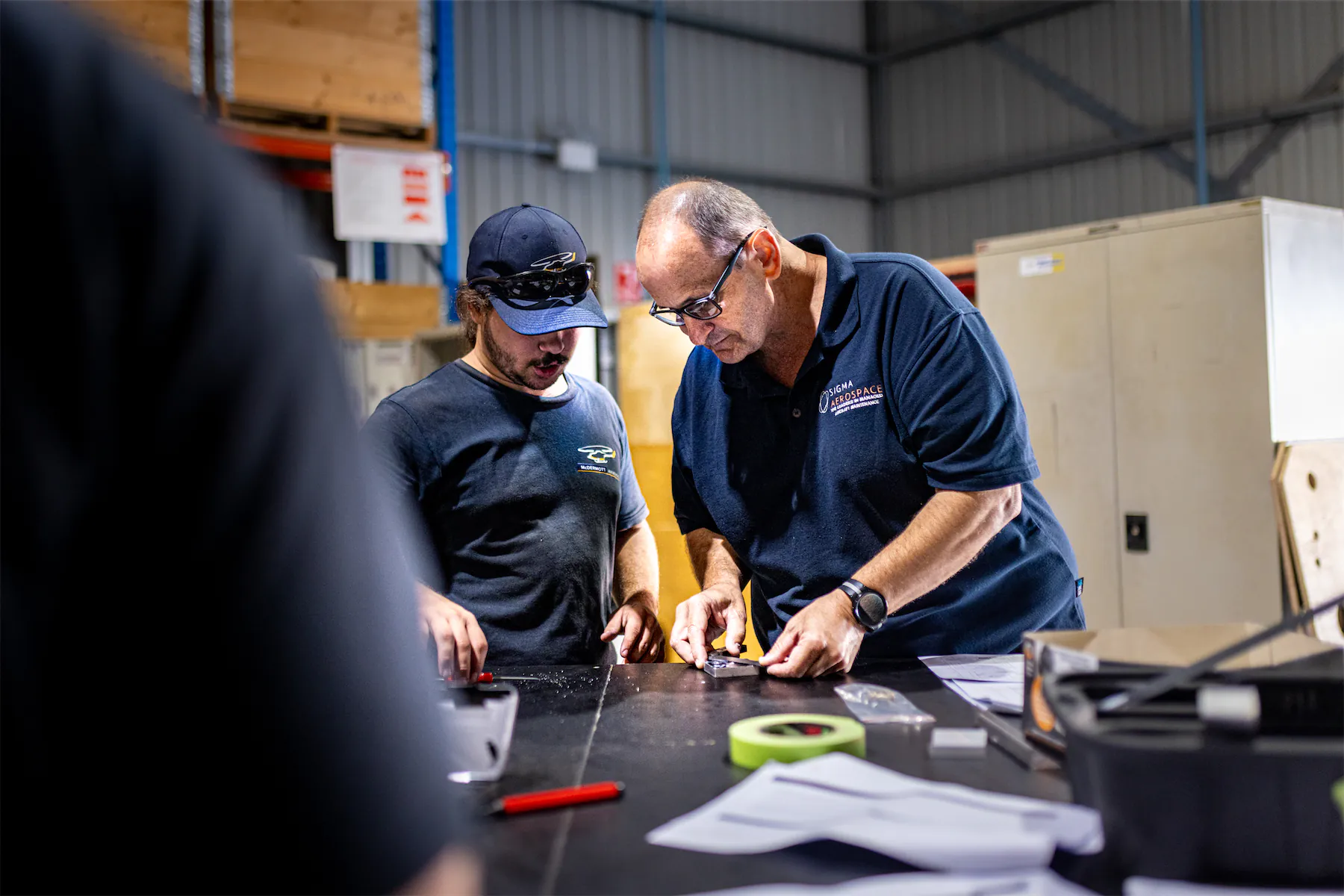
Student receiving practical instruction

For candidates

Build a useful resume.

Show employers your interests, practical examples and willingness to learn.

Helicopter at a maintenance facility

For candidates

Understand apprenticeships.

See how employment, workplace learning and Aeroskills training fit together.

Aircraft maintenance hangar

For industry

Plan beyond the intake.

Explore candidate sourcing, apprentice employment models and ongoing people support.

Sigma Aerospace College

Ready to take the first step?

Looking for a place in AIR? Express interest. Looking to build a class for your region or operation? Tell us what you need and request a quote.