
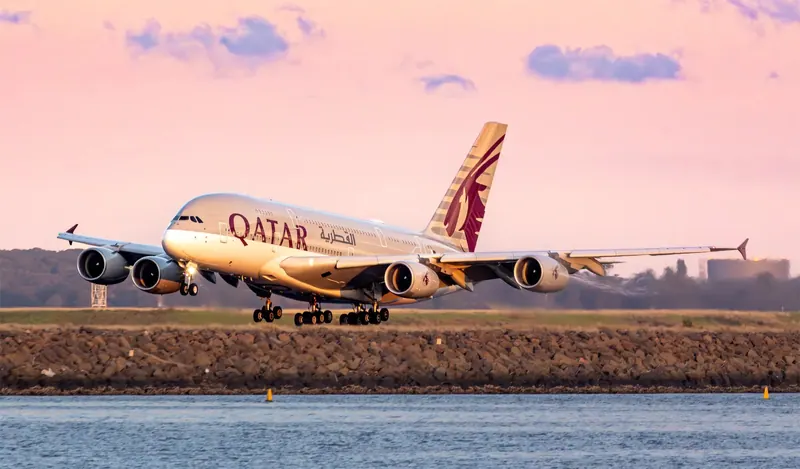
Qatar QCAA to CASA Licence Conversion / International Straight Recognition or CASR Part 66 Standard Pathway (RPL)
Two CASA pathways are available for eligible holders of a Qatar QCAA aircraft maintenance licence:
– International Straight Recognition — Sigma assesses the foreign licence under CASR 1998 regulation 66.040 where it is current, or regulation 66.050 where it was previously held. No Australian MEA units of competency or AQF qualification are issued. After Sigma reports the successful MTO assessment outcome, the applicant applies using CASA Form 544.
– CASR Part 66 Standard Pathway (RPL) — Sigma applies Credit Transfer, RPL and gap training against Australian MEA units and the Part 66 MOS sections 66.A.25 and 66.A.30. After the Australian civil qualification requirements are met and Sigma reports the outcome, the applicant applies using CASA Form 540.
Sigma confirms the appropriate pathway only after reviewing certified true copies of the applicant’s licence, identity, examination, training, employment and practical-experience records. CASA makes the final licensing decision.
Who is this course for?
Aircraft maintenance engineers who currently hold or previously held a Qatar QCAA licence and seek a CASA Part 66 B1.1, B1.2, B1.3, B1.4 or B2 outcome through either the foreign-licence MTO assessment pathway or the Australian VET RPL and gap-training pathway.
Course Outcome / Certification
International Straight Recognition — upon successful completion:
- Country-specific MTO foreign-licence assessment and final report
- Results for any required CASA Part 66 gap or full-module examinations and essays
- Sigma submission of the Form 465 training-outcome notification
- Application guidance for CASA Form 544
- No Australian MEA units of competency or AQF qualification are issued under this pathway
CASR Part 66 Standard Pathway (RPL) — upon successful completion:
- Final Credit Transfer, RPL and gap-training outcomes for the applicable Australian MEA units
- AQF Statement of Attainment, Record of Results and Testamur where the enrolled qualification packaging rules are met
- Results for the applicable CASA Part 66 module examinations and essays
- Sigma submission of the Form 465 training-outcome notification
- Application guidance for CASA Form 540


Choose how you want to complete this course
Select a pathway below. Pricing, duration, entry requirements and application details update immediately to match your selection.
Course information
Qatar QCAA to CASA Licence Conversion
International Straight Recognition or CASR Part 66 Standard Pathway (RPL)
Delivered via
CASR Part 66 Standard Pathway (RPL) Australian VET RPL and Gap Training for International Engineers
This is the Australian civil qualifications pathway for an international aircraft engineer under CASR 1998 regulation 66.025 and the basic knowledge, competency and practical-experience requirements in Part 66 MOS sections 66.A.25 and 66.A.30.
Sigma maps the candidate's verified foreign training, qualifications and aircraft-maintenance experience against current Australian MEA units of competency and CASA Part 66 knowledge requirements. Credit Transfer and Recognition of Prior Learning are granted only where certified and authenticated evidence demonstrates equivalence and competency. The candidate completes the remaining Unit of Competency gap training, practical evidence, assessment and CASA module examinations required for the selected licence category.
This pathway can produce nationally recognised VET outcomes. After all applicable requirements are completed, Sigma submits the Form 465 training-outcome notification and the applicant applies to CASA using Form 540 — Australian Civil Qualifications.
The alternative International Straight Recognition pathway assesses an eligible foreign licence under regulations 66.040 or 66.050, does not award Australian MEA units, and supports a Form 544 application.
The competency standard is not reduced by RPL. Every unit awarded must meet the complete training-product requirements. All international evidence supplied must be a certified true copy. EASA licences issued by the Netherlands are not accepted as the verifiable foreign-licence basis for this conversion product.
Delivered via
International Straight Recognition Foreign Licence Assessment under CASR Part 66 — No Units of Competency
This is Sigma's Part 147 Maintenance Training Organisation assessment pathway for an eligible foreign aircraft maintenance licence issued by a country that is not a recognised State.
A current foreign licence is assessed under CASR 1998 regulation 66.040. Where the applicant previously held the licence but it is no longer current, regulation 66.050 may apply. The current Part 66 Manual of Standards sets the knowledge, competency and experience framework used by CASA.
Sigma verifies the licence and supporting records, reviews the privileges exercised, examination history, practical experience and recency, identifies any Australian Part 66 knowledge gaps, conducts the required examinations or essays, and reports the assessment outcome to CASA.
This pathway does not require or issue Australian MEA units of competency or an AQF qualification. After successful completion and Sigma's MTO outcome notification, the applicant applies to CASA using Form 544 — Foreign Civil Qualifications.
The alternative CASR Part 66 Standard Pathway (RPL) uses Australian units of competency through Credit Transfer, RPL and gap training and supports an application using Form 540.
This pathway is only available for countries and issuing authorities included in Sigma's current AC 147-02 approval. EASA licences issued by the Netherlands are not accepted because they cannot currently be verified to CASA's satisfaction.
tuition Fees
Payment Plans Available. Includes $500 non-refundable application fee
Payment Plans Available. Application fee non-refundable
Fee conditions & refunds
The displayed tuition fee is the maximum fee before approved Credit Transfer and includes the $500 non-refundable application fee.
After Sigma authenticates prior Australian VET outcomes and applies any valid Credit Transfer, the remaining balance is confirmed on the final enrolment invoice. Foreign licences, foreign qualifications and employment experience are assessed through RPL and do not automatically create Credit Transfer.
Assessment, learning material and the standard Form 465 outcome notification are included. CASA application fees, translations, document certification, issuing-authority verification charges, practical training and other charges expressly listed in Sigma's current Fees and Refunds Procedure are not included unless stated.
Fee conditions & refunds
The displayed fee covers the country-specific document review, foreign-licence assessment, identified CASA knowledge-gap preparation and examinations, final MTO report and Form 465 outcome notification.
The pathway does not include Australian MEA units of competency or an AQF qualification. CASA application fees, issuing-authority verification charges, translations, certification of documents and any separate aircraft type-rating application costs are not included unless expressly stated.
The $500 application payment is non-refundable except where Sigma's current Fees and Refunds Procedure or applicable law provides otherwise.
Course Duration
Duration may reduce with approved Credit Transfer or RPL
Actual duration depends on verification, evidence and exam availability
Duration conditions
Duration depends on the selected licence category, the units and modules remaining after Credit Transfer and RPL, the availability of valid practical evidence, and completion of CASA examinations.
The published duration is a guide. It may be shorter where Credit Transfer is granted or longer where additional evidence, training, reassessment or practical experience is required.
Duration conditions
Duration is individually determined and depends on document completeness, issuing-authority verification, examination and essay requirements, examination availability, candidate response times and practical-experience evidence.
The published duration is a guide only. CASA may request further evidence or requirements after Sigma's assessment.
Before you Apply
- Contact Sigma before applying so the licence category, issuing country and correct regulatory pathway can be confirmed.
- This pathway is designed for experienced aircraft maintenance engineers seeking the Australian civil qualifications route to a CASA Part 66 licence.
- The candidate must normally have at least two years of relevant aircraft maintenance experience and access to acceptable practical evidence.
- Every foreign licence, qualification, examination, employment and experience document supplied must be a certified true copy.
- Credit Transfer and RPL are not automatic. Sigma must authenticate and assess the evidence against current Australian requirements.
- The final units, CASA modules, practical evidence, experience requirements, duration and fee balance are confirmed after the initial mapping review.
- EASA licences issued by the Netherlands are not accepted as the verifiable foreign-licence basis for this conversion product.
- CASA makes the final licensing decision and may require further information, examinations or experience.
Review the CASA Part 147 MTO application pathway and Form 540 information
- Contact Sigma before applying so the issuing authority, licence status, category sought and correct regulatory pathway can be confirmed.
- The issuing country and licence must fall within Sigma's current foreign-licence assessment approval.
- A current licence is considered under CASR regulation 66.040. A licence previously held but no longer current may be considered under regulation 66.050.
- The applicant must provide evidence of the privileges exercised and satisfy the applicable recent-experience requirement.
- Every document supplied must be a certified true copy. Sigma may also require direct verification from the issuing National Aviation Authority, employer, training provider or other issuing organisation.
- EASA licences issued by the Netherlands are not accepted because they cannot currently be verified to CASA's satisfaction.
- This pathway does not result in MEA units of competency, an AQF Statement of Attainment or an AQF qualification.
- The United Kingdom and United States are recognised-State pathways handled directly by CASA. New Zealand licence holders use the TTMRA pathway.
- CASA makes the final licensing decision and may require further information, examinations or experience.
Review CASA's foreign licence conversion and Form 544 information
Study Units
How We Train
How We Undertake Training — CASR Part 66 Standard Pathway (RPL)
Training follows Sigma's RPL and Gap Assessment model, with an additional international document-mapping stage.
International Mapping and Credit Review
Sigma authenticates certified true copies of the foreign licence, qualifications, examinations, training and experience records and maps them against:
- the selected Australian MEA units of competency
- the applicable Part 66 MOS knowledge modules
- the basic practical experience requirements for the licence category sought
Only verified equivalent outcomes are considered for Credit Transfer or RPL.
Theory Training
Outstanding knowledge is completed through self-directed online learning supported by:
- Sigma Digital Learner Guides and PDF learning material
- unit-specific audio lectures where available
- fortnightly Toolbox 60 webinars and live Q&A sessions
- scheduled progress check-ins
- one-to-one tutoring on request
- preparation for required CASA module examinations
Practical Competency
This pathway is intended for experienced engineers. Practical competency is normally assessed by RPL using acceptable workplace evidence. Practical training is not included unless separately arranged on a fee-for-service basis.
Evidence may include authenticated logbooks, job cards, maintenance records, task documentation and third-party verification that meet Sigma's Acceptable Practical Evidence Guide.
Australian VET and CASA Outcomes
The candidate completes all remaining Unit of Competency and Part 66 requirements identified by the individual mapping. Sigma then issues the applicable AQF documentation, submits Form 465 and provides guidance for the applicant's Form 540 submission.
How We Undertake the International Straight Recognition Pathway
This is an individually mapped foreign-licence assessment and examination pathway. It is not a Unit of Competency course.
Licence and Evidence Verification
Sigma reviews certified true copies of the candidate's:
- foreign aircraft maintenance licence and ratings
- examination and training history
- work authorisations and privileges exercised
- practical experience and recency records
- identity and issuing-authority verification
Sigma compares the verified evidence with the CASA Part 66 category sought and confirms whether the candidate can proceed under Sigma's approved foreign-licence assessment scope.
Knowledge Gap Preparation
Where the comparison identifies Australian Part 66 knowledge gaps, Sigma assigns the applicable CASA module examinations and essay assessments and supplies preparation material for those gaps.
No Australian MEA units of competency are enrolled, trained or awarded under this pathway.
MTO Reporting and CASA Application
After the required assessment, examinations and evidence checks are complete, Sigma prepares the final MTO assessment outcome and submits the applicable Form 465 training-outcome notification. The applicant then submits CASA Form 544 with the required applicant evidence.
How We Assess
How We Undertake Assessment — CASR Part 66 Standard Pathway (RPL)
Sigma uses the same four-stage RPL and Gap Assessment process applied to its Australian licence pathways.
Phase 1 — Authentication, Credit Transfer and Gap Analysis
Sigma verifies the certified true copies supplied, assesses prior Australian and foreign learning, determines any Credit Transfer, and completes an initial RPL and gap mapping against the selected licence category.
The final enrolment invoice is the published maximum fee less any approved Credit Transfer.
Phase 2 — Unit Gap Assessment and Practical RPL Evidence
The candidate completes:
- knowledge gap assessments for units not fully granted through Credit Transfer or RPL
- practical evidence submissions for outstanding performance requirements
- any additional learning and reassessment needed to meet the complete Unit of Competency standard
Phase 3 — Competency Conversation
A Sigma assessor conducts a structured one-to-one competency conversation to verify technical understanding, evidence authenticity and the candidate's ability to apply the required knowledge and skills.
Phase 4 — CASA Knowledge Examinations and Final Reporting
The candidate completes the applicable CASA module examinations and essays. After all Australian VET and Part 66 requirements are met, Sigma issues the applicable AQF documentation and submits the Form 465 training-outcome notification.
The applicant remains responsible for lodging Form 540 and all supporting documents with CASA.
How We Undertake Assessment — International Straight Recognition
Assessment may include:
- authentication and verification of certified true copies
- confirmation of the issuing authority, licence status, categories, ratings, privileges and limitations
- comparison of the privileges exercised with the CASA Part 66 privileges sought
- country-specific mapping of foreign examinations against Australian Part 66 knowledge requirements
- CASA module gap or full-module examinations and essay assessments where required
- review of practical maintenance experience and recency evidence
- confirmation of English-language capability and understanding of Australian airworthiness requirements where applicable
- preparation of the final MTO foreign-licence assessment report and Form 465 outcome notification
No Australian MEA Unit of Competency assessment is conducted and no AQF certification is issued under this pathway. CASA determines the extent of recognition and makes the final licensing decision.
Entry Requirements
Age
- Minimum age 18 years at commencement of the pathway
Education and English
- Australian Year 11-equivalent English and mathematics capability; or completion of an LLN assessment at ACSF Level 3
- Sufficient English language proficiency to safely exercise the privileges of the licence sought
International Licence and Certified Evidence
- Foreign aircraft maintenance licence, training or qualification relevant to the selected CASA category
- Certified true copies of the licence, identity documents, examination certificates, training records, qualifications, employment evidence, authorisations, logbooks and practical experience records
- Direct issuing-authority, employer or prior-provider verification where requested
- EASA licences issued by the Netherlands are not accepted as the verifiable foreign-licence basis for this conversion product
Employment and Practical Evidence
- Candidate must normally be working in an aircraft maintenance environment on operating aircraft
- Candidate must be able to provide valid, sufficient, authentic and current practical evidence in accordance with the Acceptable Practical Evidence Guide
- Two years of aircraft maintenance experience; or two years of aircraft maintenance training at a regulator-approved maintenance training organisation
Computing
- Desktop or laptop computer with webcam and speaker
- Modern web browser, PDF viewer and standards-compatible office software
- Reliable broadband internet connection, active email address and sufficient digital skills
Residency
- Students must not be restricted from enrolment by the conditions of an Australian subclass 500 student visa
Age and English
- Minimum age 18 years by the time the CASA licence application is made
- Sufficient English language proficiency to safely exercise the privileges of the licence sought
Foreign Licence
- Current foreign aircraft maintenance licence from an eligible issuing authority for regulation 66.040; or evidence of a previously held licence for consideration under regulation 66.050
- The licence category and issuing country must fall within Sigma's current Part 147 foreign-licence assessment approval
- EASA licences issued by the Netherlands are not accepted for this pathway
Certified True Copies Required
- Foreign licence, including every page, category, rating, privilege, exclusion and limitation
- Identity and any name-change documents
- Examination certificates and training records
- Qualifications and statements of attainment
- Employment records, company authorisations and evidence of privileges exercised
- Experience logs, logbooks and relevant maintenance records
- Any other evidence requested by Sigma or CASA
Computing
- Desktop or laptop computer with webcam and speaker
- Modern web browser, PDF viewer and standards-compatible office software
- Reliable broadband internet connection and active email address
Still have
Questions?
Use the form below to contact our team of aircraft engineer training and licensing experts - they can help get you on the right path.
Contact our Team