Understanding Aircraft Engineer Apprenticeships
If you are researching an aircraft maintenance engineer apprenticeship, there are a few points worth understanding early.
First, an apprenticeship is an employment and training pathway, not just a course. Second, the trade qualification pathway and the licensing pathway are related, but they are not the same thing. Third, many people enter the industry through trade assistant or other support roles before moving into a formal apprenticeship. Fourth, if your long-term goal is a broader Cert IV trade base and later B-category progression, the Certificate II in Aircraft Line Maintenance is usually not the best starting point.
At Sigma Aerospace College, we deliver workplace-based apprenticeship training for aircraft engineers. Our role is to structure the training correctly, assess competence against the MEA Aeroskills requirements, and align the pathway to the outcome the learner and employer are actually aiming for. That includes being clear about where a qualification ends, where a licence begins, and which early decisions make later progression easier or harder.
What an aircraft maintenance engineer apprenticeship actually is
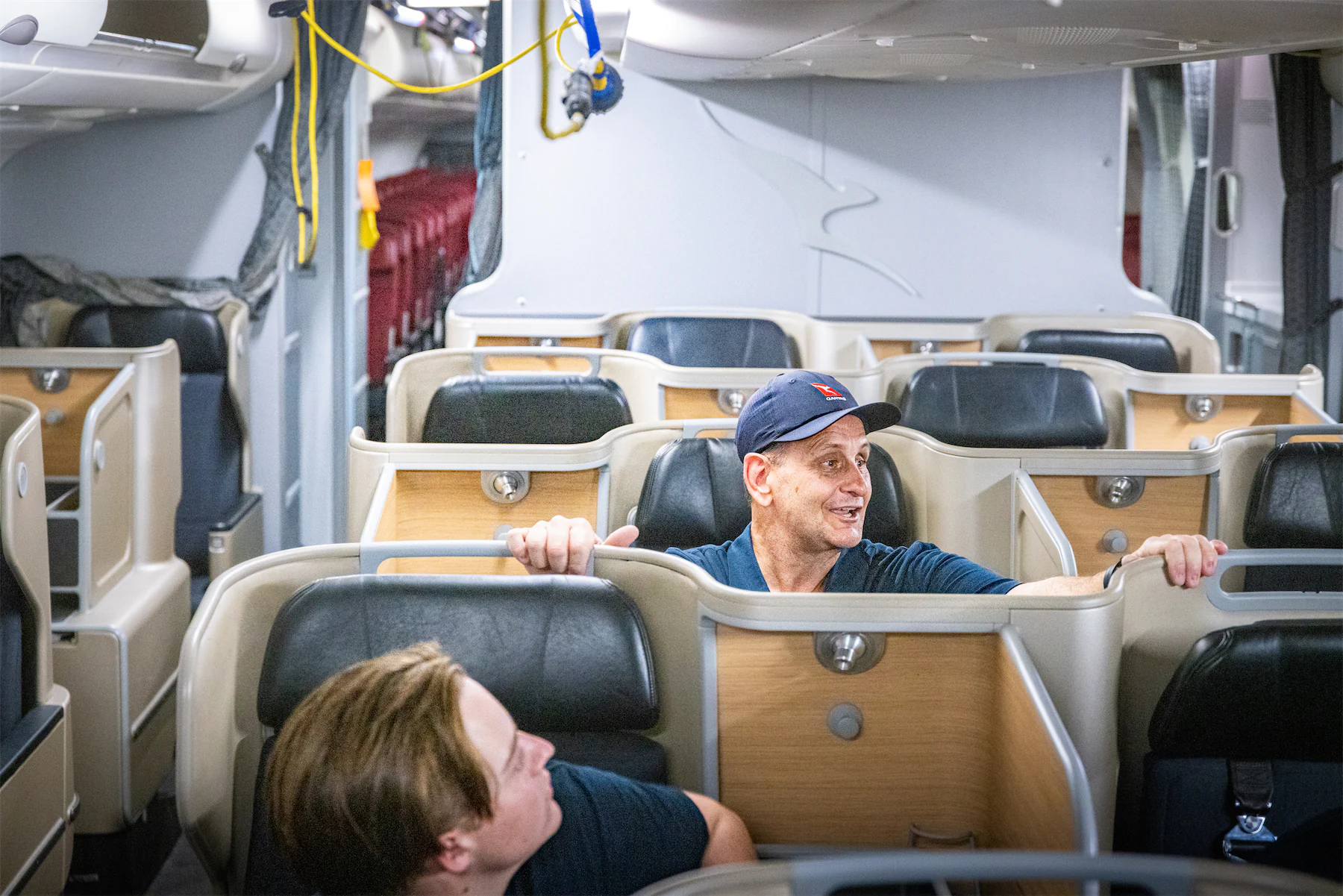
An aircraft maintenance engineer apprenticeship combines employment, supervised maintenance exposure, formal training, and assessed workplace evidence.
It is the mechanism many employers use to build the trade base of a new engineer while they are working in a real maintenance environment.
In Australia, the trade qualification most commonly used as the base for this pathway is the Certificate IV in Aeroskills, usually in a mechanical or avionics stream depending on the work being performed and the direction of the engineer’s career. A Part 66 licence sits on top of that broader training and experience picture. CASA’s current guidance makes it clear that a Part 66 licence involves both basic knowledge and basic experience, and the current Part 66 MOS states that it “sets out the requirements for the issue of an aircraft engineer licence”. That is why early training decisions matter. The apprenticeship should be planned with the longer-term pathway in mind, not treated as a separate activity.
This is also why we separate trade competence from licensing exams in our own delivery model. A licence exam has a clear regulatory purpose, but it is not a substitute for full competence across the training product. Apprentices need the trade base, the work habits, the evidence, and the practical exposure first.
How people usually enter the industry
A common misunderstanding is that the only valid entry point is a formal apprenticeship on day one. In practice, that is not how many people start.
Trade assistant, hangar support, stores, and other junior maintenance roles are common entry routes into the industry. They allow a new entrant to get into the maintenance environment, learn how the workplace operates, and demonstrate the behaviours employers actually care about. That includes reliability, safe tool use, attention to process, documentation discipline, and the ability to ask for help when required. In a safety-critical environment, those are not secondary attributes. They are part of employability.
That is why we usually advise new entrants to focus on access to the maintenance environment first. The first objective is not a perfect title. The first objective is proximity to the aircraft, the maintenance team, and the actual work.
For candidates who are not yet in the industry, our AIR pre-apprentice program exists for exactly that reason. AIR is designed to screen and prepare school leavers and other new entrants for trade assistant and apprentice-level entry into the hangar or flight line. It is a preparatory step, not a substitute for the apprenticeship itself.
What employers tend to assess first
For junior hires, employers usually assess behaviour before depth of knowledge.
They are looking for punctuality, attention to instructions, safe work habits, care with tooling and paperwork, honesty about what the applicant does not yet know, and a willingness to learn within process.
That is worth stating directly because it is often misunderstood. In early-career aircraft maintenance, employers are not expecting a new entrant to behave like an experienced engineer. They are assessing whether the person is trainable, stable, and safe to develop. A technically enthusiastic applicant who ignores process is usually a higher-risk proposition than a less polished applicant who follows instructions and behaves consistently.
This is one reason that entry-level hangar experience matters. It gives employers evidence about behaviour in context, not just a statement of interest.
Why we do not usually recommend starting with Cert II in Aircraft Line Maintenance
This is the part of the pathway that most often needs clarification.
MEA20518 Certificate II in Aircraft Line Maintenance is a real qualification with a defined use case. Under the current MEA Aeroskills Training Package, it is applicable to employees of airlines and other operators who are required to hold a CASA A Licence to perform and certify specified maintenance tasks that can be carried out on the flight line or at the departure gate. It also provides some credit toward higher-level Aeroskills study.
That said, for most new entrants who are actually trying to build a broader apprenticeship pathway and later progress toward a B1 or B2 outcome, it is still a narrower starting point than the path they are trying to build.
In plain terms, the qualification is designed around line maintenance and A-licence tasking. It has a place. But if the real objective is the broader Cert IV trade base, supported workplace exposure, and later B-category progression, our view is that it is usually better to start on that path directly rather than begin with the A-licence line maintenance certificate and then try to work sideways later.
There are exceptions. If a person is already in a very specific operator environment and is deliberately targeting A-licence line work, the qualification can make sense. But that is a narrower use case. For most school leavers, career changers, and new entrants trying to build a longer-term engineering pathway, it is usually not the cleanest first move.
Why the Cert IV apprenticeship route is usually the better foundation
The Certificate IV in Aeroskills qualifications are the trade qualifications that the training package positions for broader aircraft maintenance work.
The current training package describes the avionics and mechanical Cert IV qualifications as suitable for apprenticeship delivery, and it also makes clear that, with the correct elective selections, they articulate to the corresponding Diploma pathways used in later B2 and B1 progression.
That matters because the apprenticeship is not just about collecting units. It is about building the correct technical base in the correct environment.
If the long-term objective is a broader engineering career, the cleaner route is usually:
enter the maintenance environment,
start the correct apprenticeship,
build competence and evidence in the relevant Cert IV stream,
then progress toward the higher-level licensing pathway that matches the actual work.
That sequence is more coherent than starting in a narrower line pathway and trying to reassemble the broader trade base later.
How we structure apprenticeship training at Sigma
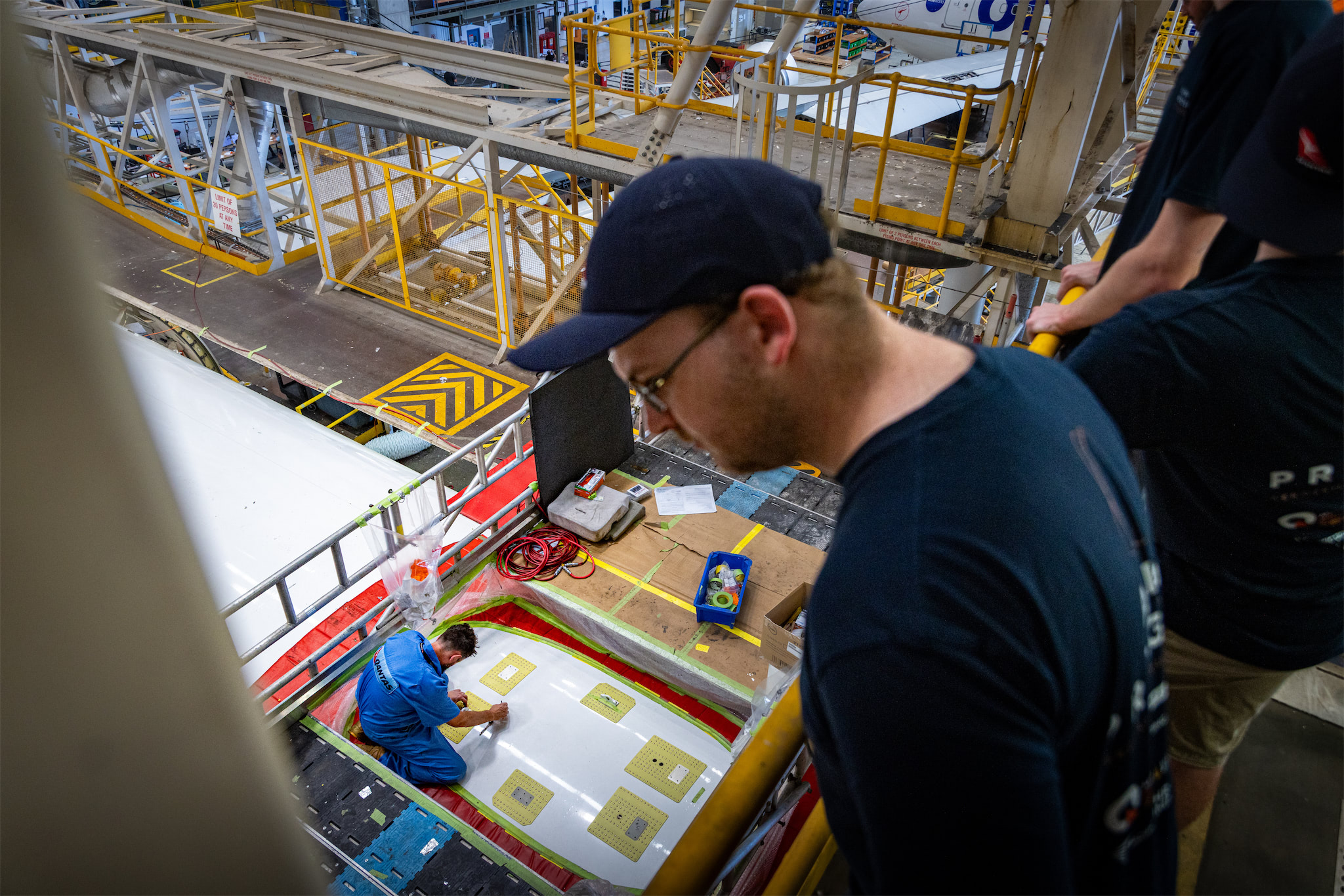
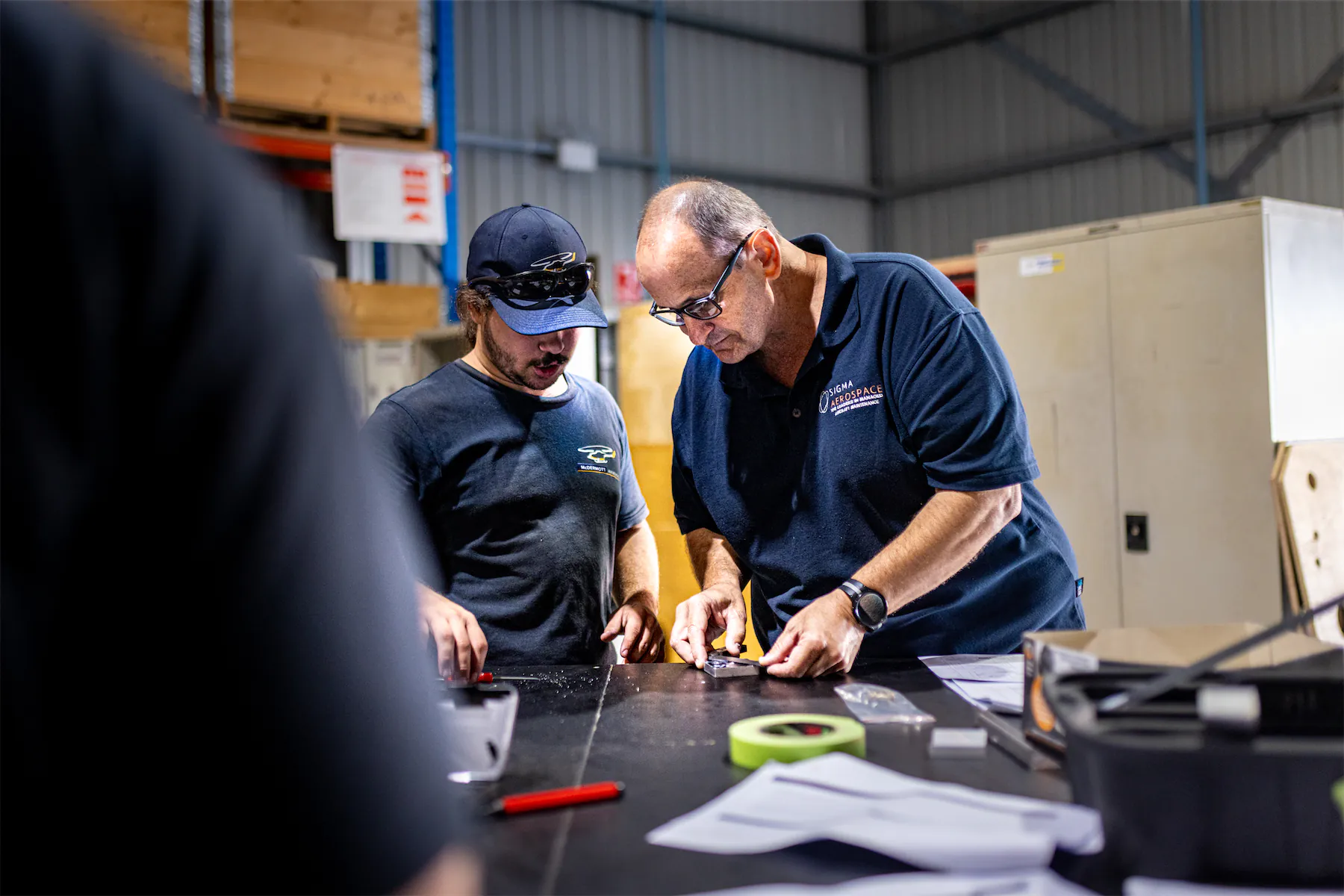
Our apprenticeship model is workplace-delivered.
That means we build the learning around actual maintenance exposure rather than removing apprentices from the job for generic block-release delivery as a default – rather an option to support operators when the need arises.
In practical terms, that means we plan the training against the work the apprentice is actually seeing, and if desired by the hangar, sequence MEA units in a way that matches the maintenance environment, and assess competence through a combination of knowledge tasks, technical questioning, workplace evidence, observations, and logbook or evidence review. The purpose is to demonstrate full coverage of the required MEA outcomes, not partial exposure and not a pass-mark approach to competence.
Our model also includes regular trainer contact. That includes monthly check-ins, structured technical support, recurring group sessions, face-to-face workplace engagement, and targeted intervention where an apprentice is stuck on a technical or learning issue. This is done to keep progress visible, keep evidence usable, and reduce the common problem of apprentices drifting for long periods without a clear picture of what is missing.
That structure is deliberate. The current Outcome Standards for RTOs require training to be “engaging, well-structured” and to enable students to attain “industry relevant competencies”. In a workplace apprenticeship, that should be reflected in the way the training is organised, supported, and assessed. It should not rely on the employer carrying the entire development burden alone, and it should not leave the apprentice with incomplete evidence or poorly timed assessment.
Why this matters for employers as well as students
From an employer’s perspective, the question is not simply whether an apprentice is enrolled.
The practical question is whether the apprentice is progressing, seeing enough of the right work, and building evidence that stands up to scrutiny.
That is why workplace verification, employer contact, supervisor alignment, and training structure matter. An apprenticeship model only works properly if the apprentice is exposed to meaningful work, the supervisor understands what is being gathered, and the provider stays close enough to the workplace to identify problems early.
This is also where a pre-apprentice screening model can be useful. Through AIR, employers can assess candidates before the apprenticeship begins, rather than waiting until after a contract is in place to find out whether the person is suitable for the environment.
Where to start
If you are not yet employed in aircraft maintenance, the most practical next step is to get into a real maintenance environment.
That can be through AIR, a trade assistant role, or another entry-level role around the hangar.
If you are already employed and your employer is ready to support you, the more efficient move is usually to start the apprenticeship on the correct Cert IV pathway rather than add a narrower qualification that does not match your longer-term objective.
The main point is straightforward. The first decision in aircraft maintenance should be based on the outcome you actually want. If the goal is a broader trade base and later B-category progression, start on that path. If the goal is a specific A-licence line role in a defined operating environment, choose accordingly. At Sigma Aerospace College, we train apprentices against the actual maintenance environment, the MEA training package, and the Part 66 framework so the pathway remains coherent from the start.
Frequently asked questions
Can I get an aircraft maintenance engineer apprenticeship with no experience?
Yes. Many people enter through trade assistant, hangar support, or other entry-level maintenance roles before moving into a formal apprenticeship. That is a normal entry route, not a failed start.
Do I need a degree to become an aircraft maintenance engineer?
No. For most people, this is a trade and licensing pathway rather than a degree-first pathway. The critical factors are the maintenance environment, the correct training pathway, and the evidence and experience required for later progression.
When is Cert II in Aircraft Line Maintenance the right option?
Usually when the person is deliberately targeting a CASA A-licence line maintenance role in the appropriate operator environment. It is not usually the cleanest first step for a new entrant whose actual goal is the broader apprenticeship, Cert IV, and later B1 or B2 path.
Further reading
- Aircraft Engineer Apprenticeships & Traineeships
- AIR Pre-Apprentice Program
- About Sigma Aerospace College
- Sigma course library
- Sigma Knowledgebase
- Sigma Jobs Board
- CASA: Aircraft maintenance engineer licence (Part 66)
- CASA: Become a licensed aircraft maintenance engineer
- Part 66 Manual of Standards
- Outcome Standards for Registered Training Organisations 2025