
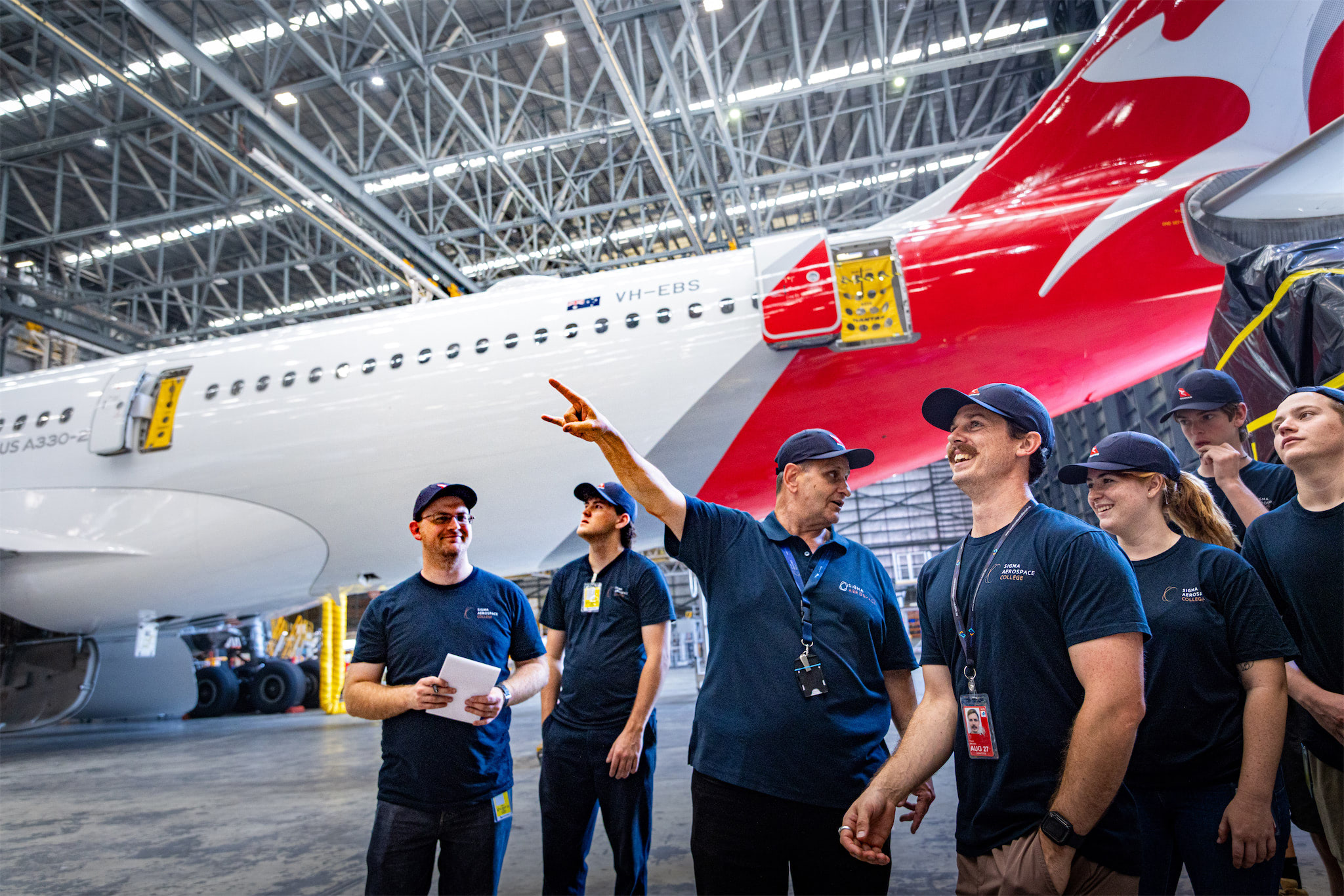
Training for Engineers in the Workplace

Aircraft Engineer
Apprenticeships & Traineeships

Workplace-delivered apprenticeship training built around live maintenance, proper assessment, and the licence outcomes industry actually needs. For future aircraft engineers, AMOs, MROs and operators who want a cleaner path from first task to real capability.

The AME Apprentice Program With Face-to-Face Support

Aircraft engineer apprenticeships built around the job

Sigma Aerospace College delivers workplace-based apprenticeship and traineeship pathways through RTO 40713 and CASA Part 147 MTO 0051.

Training, Thoughtfully Designed

The model is built around real maintenance activities, mapped progression from MEA units to Part 66 outcomes, and a proper training plan that works with the operation instead of against it.

Built for Trainees

For apprentices, that means structure, support and less guesswork. It means building competence on a realistic timeframe, and not being stuck as a beginner for years.

Built for the AMO & MRO

For employers, it means clearer progression, cleaner evidence, and fewer surprises when it is time to review competence, practical exposure and exam readiness.

Starting your aircraft engineer career

Learn in the maintenance environment, not beside it

Starting an aircraft engineer apprenticeship is not just about getting enrolled. It is about choosing a training model that helps you become useful, competent and licence-ready over time. Our apprenticeship pathways are built around workplace exposure, structured learning, proper knowledge assessment, technical questioning, and practical evidence from live maintenance. You are not left hoping that time in the hangar will somehow turn into the right evidence later.

Because this is workplace delivery, your apprenticeship is built around what you are actually doing on aircraft and components, not a generic timetable that ignores the job.

Good apprenticeships build habits, judgement and evidence together.

Want Next Steps? Get in Contact
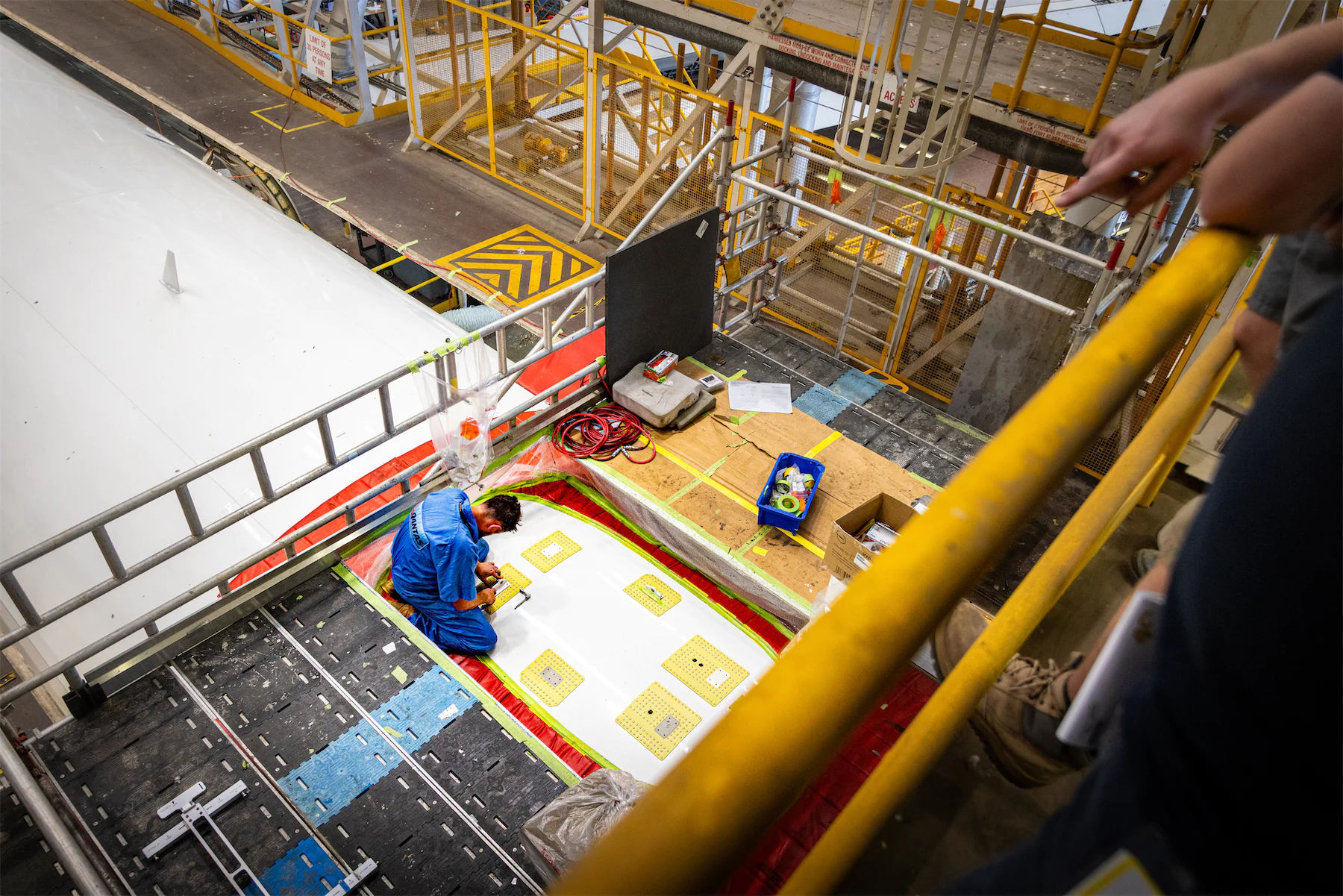
Bringing on an apprentice?

Give the apprentice a system. Give the supervisors backup.

Operators do not need another apprenticeship model that looks tidy on paper and disappears when the apprentice hits a technical gap, falls behind on evidence, or gets pushed into the wrong assessment at the wrong time.
Sigma’s workplace delivery model is designed to keep the apprentice on track without forcing the business into a one-size-fits-all timetable.

The apprentice sits on a real training plan. Progress is reviewed regularly. Trainers stay involved. Evidence is collected against the standard. Supervisors are not left carrying the whole training problem by themselves. That gives you better visibility, better control, and a better shot at producing an engineer who can actually step forward when the time comes.

Better structure early means fewer problems later.

Contact our Team

What support actually looks like

This is not set-and-forget training.

We commit to partnering with the hangar, and with our aircraft engineer apprenticeship and trainees – our goal is to help every student reach competence and grow their skills and career; and yes, we really do visit the workplace regularly.

Monthly online check-ins
Review completed work, identify missing evidence and deal with drift early.
Fortnightly toolbox talks and live Q&A
Keep the cohort aligned and talk through real aircraft, real defects and common technical gaps.
Industry-standard learning material and audio primers
Study resources that help the apprentice prepare around shift work and understand the unit before formal assessment.
Knowledge assessments
Used to confirm the full unit scope, not just a pass mark.
Competency conversations
Structured technical questioning that checks reasoning, fault logic, hazards and limits.
Workplace observations and checklists
Real maintenance tasks, real data use, real process, real supervision and real recording.
Bi-annual workplace visits and logbook reviews
Validate that the evidence reflects the right standard and the right level of exposure.
1:1 tutoring and practice quizzes
Targeted support where maths, physics, technical reading or troubleshooting needs extra lift.
Employer contact
We work directly with employers and supervisors to keep progression moving.

Why the assessment model matters

Competence first. Licensing second.

In Australia, an aircraft engineer apprenticeship outcome, a qualification outcome and a licensing outcome are related, but they are not the same thing.

We assess the MEA unit properly first. That means knowledge assessment, practical evidence and technical questioning against the full unit outcome. The knowledge assessment is separate from the CASA exam. The unit is assessed as a unit. The CASA exam is then used as the CASA exam, for the licensing outcome.

That distinction matters. A sampling exam can help confirm depth of knowledge. It cannot, by itself, prove that every element of a unit has been covered to the required standard. In aircraft maintenance, no employer wants to guess which part of the job was missed.

That is why our model is built around full competence and documented experience before licensing exams are attempted.
Source basis: current brochure methodology and current MTOE assessment

Explore Cert IV

Optional 3-week block release

Use concentrated face-to-face delivery where it adds value

Workplace delivery is the core model. But some employers want a concentrated face-to-face phase at the front of the aircraft engineer apprenticeship, or at a key point in the training plan.
For that, Sigma can structure an optional 3-week block release around the apprenticeship pathway. It can be used to give a new cohort a strong start, deliver theory and practical intensives, close common gaps, or create a planned training window without redesigning the whole apprenticeship around long absences from site.

This is not the old model where the whole apprenticeship is built around taking people away from the hangar for weeks at a time. It is an option, used where it makes sense.
This is also separate from AIR Foundations. AIR is a standalone workforce-integration program for new entrants. The block release option sits inside the apprenticeship model.

Block release should be a tool, not the whole system.

Contact Us

What the pathway can look like

The right duration depends on category, aircraft exposure and the goal.

Not every apprentice should be sold the same timetable. A rotary B1.3 pathway can look very different from a fixed-wing B1.1 pathway. The sample plans in our current material include a three-year B1.3 pathway through to Diploma and 465 submission, a five-year B1.1 example, and a shorter 18-month Certificate IV example where the qualification milestone is the immediate training focus.

These are examples, not promises. The actual training plan depends on the licence category, the maintenance environment, the apprentice’s exposure, attendance, and progression.

The point is not to force everyone through one template. The point is to build the right pathway for the job and the outcome.

Study with Sigma

Study Modes

See how workplace delivery, RPL and other study modes differ.

View study modes

Certificate IV in Aeroskills

Core qualification pathway for apprentices building trade capability.

View Certificate IV

Diploma of Aeroskills

Advanced packaging for higher-level outcomes and licensing progression.

View Diploma

Aircraft Engineer Licence Part 66

Understand categories, exams, experience and how the licensing pathway actually works.

View Pathways

AIR Foundations

Separate 3-week workforce-integration program for new starters. Not the apprenticeship itself.

View AIR Foundations

How do I become an aircraft engineer?

Plain-English short course for people trying to understand the trade, the qualifications and the licensing pathway.

View Industry Breakout course

Start the right apprenticeship pathway
Apprentices: tell us where you are starting, what background you have, and what sort of aircraft environment you want to work in. Employers: tell us the role, the location, the aircraft environment and the outcome you want the training built to.
ENQUIRE