Study with Sigma Aerospace CollegeAbout Our College

Sigma Aerospace College

About Our
AIrcraft Engineer Training College

RTO 40713 and a CASA Part 147 training organisation. We train working aircraft engineers with assessment that stands up to scrutiny, and licensing knowledge outcomes delivered the right way.

Training engineers who work

Built for the hangar, not the classroom

Sigma Aerospace College exists to solve a simple problem: aircraft engineers need training that respects the job, respects experience, and still holds the line on standards. Most of our students are already working in maintenance. We structure training around real evidence, clear mapping, and verification. When your pathway includes a CASA licensing outcome, we run the CASA Part 66 exams separately under secure invigilation as the regulator’s confirmation check.

Made for working engineers

Online theory that fits shift work, supported by practical, job-relevant resources. You’ll see podcast-style lectures, digital learner guides, webinars and live Q&A when they add value, not as filler.

Competence is the standard

For AQF outcomes, we assess full unit coverage. Evidence is mapped, gaps are called early, and only closed once the requirements are met. A pass mark on a sampling test can’t prove you’re competent across an entire unit, so we don’t pretend it can.

Competence is the standard

For AQF outcomes, we assess full unit coverage. Evidence is mapped, gaps are called early, and only closed once the requirements are met. A pass mark on a sampling test can’t prove you’re competent across an entire unit, so we don’t pretend it can.

Training for engineers at every career stage

Apprentice to LAME. General aviation to airline fleets. Australia and overseas.

We deliver nationally recognised Aeroskills training and targeted short courses for aircraft maintenance engineers. If your goal includes CASA Part 66 outcomes, we support category knowledge training and exams, licence requalification pathways, and options for licence conversion where applicable.

We built the college for engineers who want real outcomes without busy-work. The work still has to be done. We just strip out the admin theatre.

If you know the outcome you’re chasing, go straight to the course group that matches it.

Find A Course
Sigma Aerospace College has students undertaking category, type, & short-course training for acclaimed companies:
It was way better than my experience with another MTO I worked with before
I was impressed by the willingness of the Sigma staff to help find ways to [help]. Also, I much appreciated being able to ring them whenever I had a question. It was way better than my experience with another MTO I worked with before. Keep up the good work.
Philemon – Mission Aviation Fellowship

Qualification vs licence?

Plain English, no shortcuts

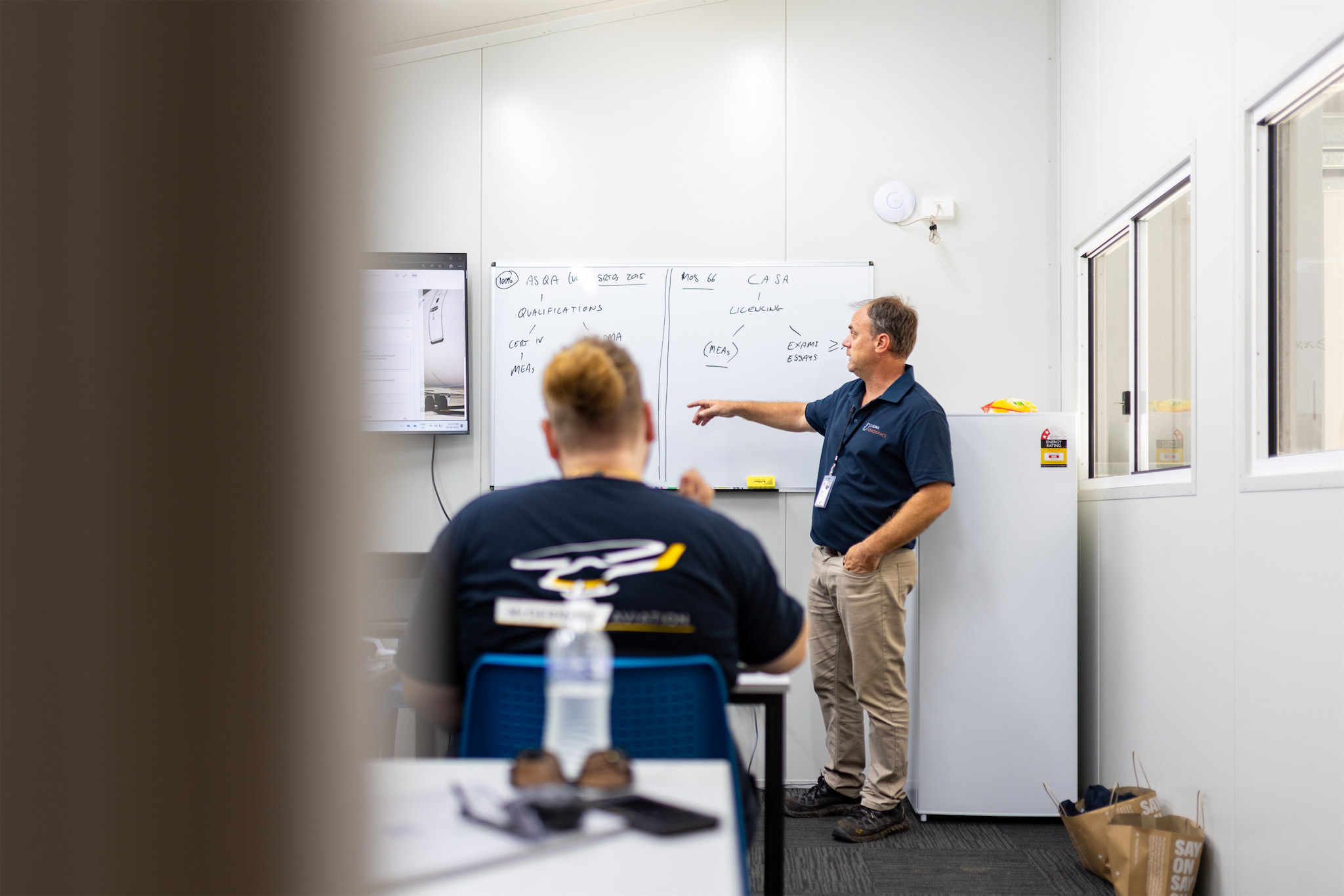
An AQF qualification is a vocational outcome. It means you’ve been assessed as competent against defined units of competency, including the required knowledge and performance evidence.

A CASA Part 66 licence is a regulatory privilege. It’s issued by CASA, and it relies on meeting experience requirements and passing the CASA knowledge exams for the category you’re applying for.

Our approach keeps those two systems honest. We assess competence for the vocational outcome first, using mapped assessment and verified evidence. Where licensing outcomes apply, you then sit the CASA Part 66 exams under invigilation as a separate regulator check.

If your end goal is a Part 66 category outcome, start with the category training list.

View CASA Part 66 training
Sigma reminded [us] of what aviation used to be like.
From talking to other [engineers] who had been in this industry for a while; Sigma didn’t necessarily have to do too much to stand out from other aviation training institutions – but yet they have gone above and beyond, and I think they have done every possible thing that makes an aviation training institution better. I spoke with someone who’s been in the industry for quite some time, and he said that Sigma reminded him what aviation used to be like.
John – Jetfix Avionics Toowoomba

How we keep training honest

Assessment you can defend

Aircraft maintenance is unforgiving. Assessment should be the same.

Full unit coverage, mapped
We map assessment evidence to the unit requirements, including performance criteria, required knowledge, and assessment conditions. It’s systematic and auditable.
Practical evidence comes from real maintenance work
RPL and gap pathways use authentic workplace evidence such as logbooks, task records, task cards and third‑party verification. If it can’t be verified as valid and current, it doesn’t count.
Workplace Resource Assessment
We conduct a workplace resource assessment for all trainees and apprentices to collect information about on the job supervision arrangements, including who the supervisor is, access to aircraft and equipment, types of maintenance performed, safety management, and so on.
Knowledge assessments are separate from CASA exams
We use mapped knowledge assessments to confirm vocational competence. CASA Part 66 exams are then used for what they’re intended for: confirming licensing knowledge.
Competency conversations
Structured technical conversations validate reasoning, decision-making, hazard awareness, and authenticity of the submitted evidence.
Secure, recorded exams when remote
Where remote exams are used, they run with identity checks, an approved invigilator, additional live offsite supervision, and session recording retained for compliance and audit.
Sigma has allowed me to grow as a person – as an engineer.
Watch Video
Listen to Sigma Aerospace aircraft engineer David Van Der Merwe discuss his experience working with Sigma, and training with Sigma Aerospace College’s renowned type training.
David Van Der Merwe

Two delivery models. One assessment standard.

Workplace delivery for apprentices and trainees. RPL and gap assessment for experienced engineers.

Workplace delivery is structured. Apprentices and trainees work to a training plan with defined progression milestones, trainer contact, and workplace-based assessment supported by an approved supervisor.

RPL and gap assessment starts with an initial training needs report (CASA refers to this as a ‘Initial RPL Report’). It tells you what can be credited, what needs evidence, and what requires targeted theory gap work. We then build your learning environment in the LMS with a customised learning plan and the specific assessments you need.

Different starting points. Same rules of evidence.

Explore Modes

AQF Qualifications

Certificate II, Certificate IV and Diploma programs for Aeroskills outcomes, delivered for working engineers.

Explore

CASA Part 66 Category Training

Category knowledge training pathways aligned to your A, B1 or B2 outcome, including exam-ready support.

Explore

Aircraft Type Training

Approved type training options across common fleets, with theory and practical elements where applicable.

Explore

Short Courses

Non‑AQF short courses for specific skills, refreshers, and targeted capability lift.

Explore

Confused about licensing, qualifications or terminology?
Straight answers for aircraft engineers. Built from the questions we get every week.
EXPLORE THE KNOWLEDGEBASE